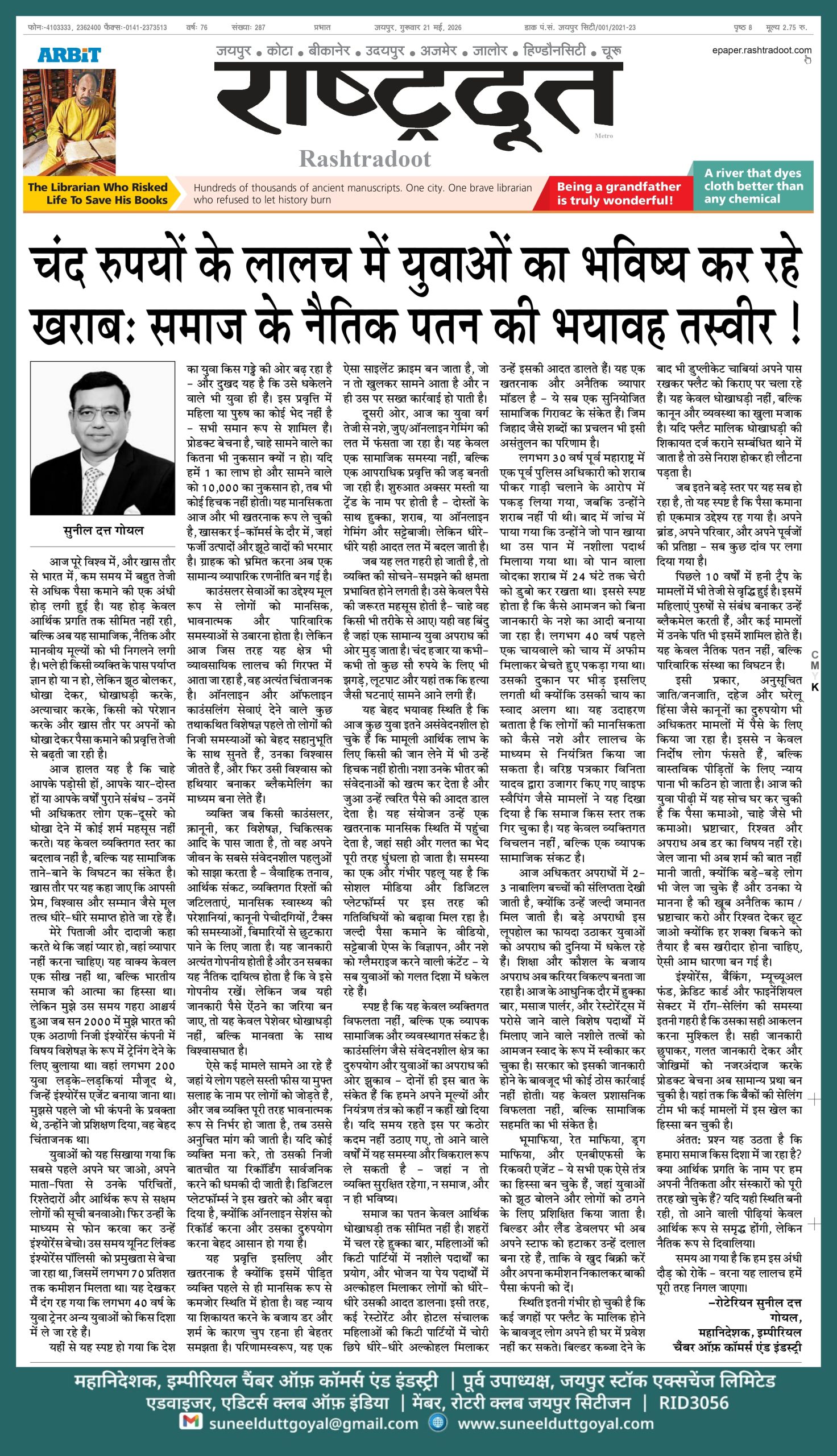

Today, across the world – and especially in India – there is a blind race to earn huge amounts of money in a very short time. This race is no longer limited to economic growth; it is now consuming social, moral, and human values as well. Whether a person possesses real knowledge or not no longer seems to matter. The tendency to earn money through lies, deception, fraud, exploitation, harassment, and especially by betraying one?s own people is growing rapidly.
The situation today is such that whether it is your neighbors, friends, or relationships built over decades, many people no longer feel ashamed of cheating one another. This is not merely an individual behavioral shift; it is a sign of the breakdown of the social fabric itself. The foundations of mutual love, trust, and respect are gradually disappearing.
My father and grandfather used to say, ?Where there is love, there should not be business.? This was not just advice; it was once part of the soul of Indian society. However, I was deeply shocked in the year 2000 when I was invited as a subject expert to train people at one of India?s leading private insurance companies. Around 200 young boys and girls were present there, preparing to become insurance agents.
Before my session, the company?s speakers gave training that was extremely disturbing. Young people were taught to first go home, ask their parents for lists of relatives, acquaintances, and financially stable people, and then use those personal relationships to sell insurance policies. At that time, Unit Linked Insurance Policies (ULIPs) were being aggressively sold because they offered commissions of nearly 70%. I was stunned to see how trainers in their forties were pushing young minds in such a dangerous direction.
It became clear from that moment where the youth of the country was heading – and sadly, the people pushing them into this pit were themselves young. There was no distinction between men and women in this trend; everyone seemed equally involved. The only objective was to sell products, regardless of how much loss the customer suffered. Even if we earned ?1 while the other person lost ?10,000, there was no hesitation.
Today, this mentality has become even more dangerous in the era of e-commerce, where fake products and false promises are everywhere. Misleading customers has become a common business strategy.
The original purpose of counseling services was to help people overcome emotional, mental, and family-related problems. But today, the way this field too is falling prey to commercial greed is deeply alarming. Some so-called ?experts? providing online and offline counseling services first listen sympathetically to people?s personal problems, gain their trust, and then weaponize that trust for blackmail.
When a person approaches a counselor, lawyer, tax consultant, doctor, or similar professional, they share the most sensitive aspects of their lives – marital stress, financial crises, relationship complications, mental health struggles, legal troubles, tax issues, or health concerns. Such information is extremely confidential, and it is the ethical responsibility of professionals to protect it. But when this information becomes a tool for extortion, it is not merely professional misconduct – it is a betrayal of humanity itself.
Many cases are now emerging where such individuals first attract people through low-cost or free consultations, and once the person becomes emotionally dependent, they start making unethical demands. If the victim refuses, they are threatened with exposure of private conversations or recordings. Digital platforms have made this danger even worse because online sessions can easily be recorded and misused.
This trend is especially dangerous because the victims are already mentally vulnerable. Instead of seeking justice or filing complaints, many choose silence due to fear and shame. As a result, this has become a ?silent crime? that rarely comes into the open and often escapes strict legal action.
On the other hand, today?s youth are rapidly falling into addiction to drugs, gambling, and online gaming. This is no longer just a social issue; it is becoming the root of criminal behavior. It usually begins in the name of ?fun? or ?trend? – hookah sessions with friends, alcohol, online gaming, or betting. Gradually, these habits turn into addictions.
Once addiction deepens, a person?s ability to think rationally starts declining. The only thing they feel is the need for money – by any means possible. This is the point where an ordinary young person turns toward crime. Today, disputes, robberies, and even murders are occurring for just a few thousand – or sometimes even a few hundred – rupees.
It is horrifying that some youths have become so emotionally numb that they do not hesitate to take someone?s life for small financial gains. Addiction destroys sensitivity, while gambling creates the habit of chasing instant money. Together, they push individuals into a dangerous mental state where the difference between right and wrong becomes blurred.
Another serious aspect of the problem is that social media and digital platforms are actively promoting such activities. Videos promising ?quick money,? advertisements for betting apps, and content glorifying intoxication are pushing young people in the wrong direction.
Clearly, this is not merely an individual failure; it is a large-scale social and systemic crisis. The misuse of sensitive professions like counseling and the increasing drift of youth toward crime are both signs that society has lost its values and control mechanisms somewhere along the way.
If strict steps are not taken in time, the problem may become far more severe in the coming years – a future where neither individuals, nor society, nor the coming generations will remain safe.
The decline of society is not limited to financial fraud alone. Hookah bars operating in cities, the use of intoxicating substances in women?s kitty parties, and secretly mixing alcohol into food or beverages to gradually create addiction – all these are signs of a planned social degradation. Many restaurant and hotel operators reportedly add alcohol secretly during women?s gatherings to slowly build dependency. This is a dangerous and unethical business model. The growing use of terms like ?Gym Jihad? is also a result of such social imbalance.
Around 30 years ago in Maharashtra, a former police officer was arrested for allegedly driving under the influence of alcohol, despite not having consumed liquor. Later investigations revealed that the paan he had eaten contained intoxicating substances. The paan vendor used to soak cherries in vodka for 24 hours before serving them. This incident clearly shows how ordinary people are unknowingly being pushed toward addiction.
Similarly, nearly 40 years ago, a tea seller was caught mixing opium into tea. His shop used to attract large crowds because people believed his tea had a ?special taste.? This example demonstrates how addiction and greed can be used to manipulate public behavior.
Cases such as ?wife swapping,? exposed by senior journalist Vinita Yadav, reveal how deeply society has deteriorated. This is not just personal deviation; it reflects a broader social crisis.
Today, many crimes involve two or three minors because they can secure bail quickly. Major criminals exploit this loophole and push children into the world of crime. Instead of education and skill development, crime is increasingly becoming a career option for some youths.
In modern times, intoxicating substances mixed into food and beverages served at hookah bars, massage parlors, and restaurants are often accepted by the public merely as ?taste enhancers.? Despite government awareness of such practices, meaningful action is rarely taken. This is not just an administrative failure but also a sign of growing social acceptance.
Land mafias, sand mafias, drug mafias, and NBFC recovery agents have all become part of a system where young people are trained to lie and deceive others. Builders and land developers are now removing permanent staff and turning them into commission-based brokers so they sell properties themselves and hand over the remaining money to companies after taking their cuts.
The situation has become so serious that in some places, flat owners cannot even enter homes they legally own. Even after handing over possession, some builders allegedly keep duplicate keys and rent out the flats themselves. This is not just fraud – it is an open mockery of law and order. If flat owners approach police stations to report such fraud, they often return disappointed.
When all this is happening on such a large scale, it becomes clear that earning money has become the only objective. People are willing to risk their brand reputation, family honor, and ancestral legacy for profit.
Over the past decade, honey-trap cases have also increased rapidly. In many cases, women establish relationships with men and later blackmail them, sometimes with the involvement of their husbands. This is not merely moral decline; it reflects the collapse of the family institution itself.
Similarly, laws related to Scheduled Castes/Scheduled Tribes, dowry harassment, and domestic violence are reportedly being misused in many cases for monetary gains. This not only traps innocent people but also makes it harder for genuine victims to receive justice.
A dangerous mindset has now taken root among sections of the younger generation: ?Earn money, no matter how.? Corruption, bribery, and crime are no longer feared. Going to jail is no longer considered shameful because many influential people have already been imprisoned. A common perception has developed that one can commit unethical acts, engage in corruption, and later escape punishment through bribery because ?everyone has a price.?
The problem of mis-selling in the insurance, banking, mutual fund, credit card, and financial sectors has become so deep that its true scale is difficult to estimate. Hiding facts, providing misleading information, and ignoring risks while selling products has become common practice. Even bank sales teams are often part of this system.
Ultimately, the question arises: What direction is our society moving toward? In the name of economic progress, have we completely lost our morality and values?
If this situation continues, future generations may become economically prosperous but morally bankrupt.
The time has come to stop this blind race for money – otherwise, greed will consume us completely.
Rotarian Suneel Dutt Goyal
Director General, Imperial Chamber of Commerce and Industry,
Adviser, Editor?s Club of India,
Ex. Vice President, Jaipur Stock Exchange Limited, Jaipur, Rajasthan,
Member, Rotary Club Jaipur Citizen, (RID3056)
suneelduttgoyal@gmail.com
??? ?????? ?? ???? ??? ?????? ?? ?????? ?? ??? ????: ???? ?? ????? ??? ?? ????? ?????? !
?? ???? ????? ???, ?? ??? ??? ?? ???? ???, ?? ??? ??? ???? ???? ?? ???? ???? ????? ?? ?? ???? ???? ??? ??? ??? ?? ???? ???? ?????? ?????? ?? ????? ???? ???, ????? ?? ?? ???????, ????? ?? ?????? ??????? ?? ?? ?????? ??? ??? ??? ?? ???? ??????? ?? ??? ???????? ????? ?? ?? ? ??, ????? ??? ?????, ???? ????, ???????? ????, ???????? ????, ???? ?? ?????? ???? ?? ??? ??? ?? ????? ?? ???? ???? ???? ????? ?? ????????? ???? ?? ????? ?? ??? ???
?? ???? ?? ?? ?? ???? ???? ?????? ???, ???? ???-????? ??? ?? ???? ?????? ?????? ????? – ????? ?? ?????? ??? ??-????? ?? ???? ???? ??? ??? ???? ????? ???? ????? ?? ???? ????????? ???? ?? ????? ???? ??, ????? ?? ??????? ????-???? ?? ????? ?? ????? ??? ??? ??? ?? ?? ??? ??? ?? ???? ?????, ??????? ?? ?????? ???? ??? ???? ????-???? ?????? ???? ?? ??? ????
???? ?????? ?? ?????? ??? ???? ?? ?? ????? ????? ??, ???? ??????? ???? ???? ??????? ?? ????? ???? ?? ??? ???? ??, ????? ?????? ???? ?? ????? ?? ?????? ??? ????? ???? ?? ??? ???? ??????? ??? ?? ?? 2000 ??? ???? ???? ?? ?? ?????? ???? ?????????? ????? ??? ???? ???????? ?? ??? ??? ???????? ???? ?? ??? ?????? ??? ???? ???? 200 ???? ?????-???????? ????? ??, ??????? ?????????? ????? ????? ???? ???
????? ???? ?? ?? ????? ?? ???????? ??, ???????? ?? ????????? ????, ?? ???? ???????? ??? ?????? ?? ?? ?????? ??? ?? ???? ???? ???? ?? ???, ???? ????-???? ?? ???? ????????, ??????????? ?? ?????? ??? ?? ????? ????? ?? ???? ?????? ??? ?????? ?? ?????? ?? ??? ???? ?? ?????? ?????????? ????? ?? ??? ????? ?????? ?????????? ?????? (ULIP) ?? ???????? ?? ???? ?? ??? ??, ?????? ???? 70% ?? ????? ????? ??? ?? ????? ??? ??? ?? ??? ?? ???? 40 ???? ?? ???? ?????? ???? ?????? ?? ??? ???? ??? ?? ?? ??? ????
???? ?? ?? ?????? ?? ??? ?? ??? ?? ???? ??? ????? ?? ?? ??? ??? ?? – ?? ???? ?? ?? ?? ??? ?????? ???? ?? ???? ?? ???? ?? ????????? ??? ????? ?? ????? ?? ??? ??? ???? ?? – ??? ???? ??? ?? ????? ???? ???????? ????? ??, ???? ????? ???? ?? ????? ?? ?????? ????? ? ??? ??? ???? ?1 ?? ??? ?? ?? ????? ???? ?? ?10,000 ?? ?????? ??, ?? ?? ??? ???? ???? ?????
?? ???????? ?? ?? ?? ?????? ??? ?? ???? ??, ????? ?-?????? ?? ??? ???, ???? ????? ???????? ?? ???? ????? ?? ????? ??? ?????? ?? ?????? ???? ?? ?? ??????? ????????? ?????? ?? ?? ???
??????? ?????? ?? ???????? ??? ??? ?? ????? ?? ??????, ????????? ?? ????????? ???????? ?? ?????? ???? ??? ????? ?? ??? ??? ?? ??????? ?? ?????????? ???? ?? ?????? ??? ??? ?? ??? ??, ?? ?????? ???????? ??? ?????? ?? ?????? ????????? ?????? ???? ???? ??? ??????? ?????????? ???? ?? ????? ?? ???? ???????? ?? ???? ????????? ?? ??? ????? ???, ???? ??????? ????? ???, ?? ??? ??? ??????? ?? ?????? ????? ??????????? ?? ?????? ??? ???? ????
??????? ?? ???? ???????, ???????, ?? ????????, ???????? ??? ?? ??? ???? ??, ?? ?? ???? ???? ?? ???? ????????? ?????? ?? ???? ???? ?? – ??????? ????, ?????? ????, ????????? ??????? ?? ????????, ?????? ????????? ?? ??????????, ?????? ??????????, ????? ?? ????????, ????????? ?? ??????? ???? ?? ??? ???? ??? ?? ??????? ?????? ?????? ???? ?? ?? ?? ???? ?? ????? ??????? ???? ?? ?? ?? ??? ?????? ????? ????? ?? ??? ??????? ???? ????? ?? ????? ?? ???, ?? ?? ???? ?????? ???????? ????, ????? ?????? ?? ??? ?????????? ???
??? ?? ????? ????? ? ??? ??? ???? ?? ??? ???? ????? ??? ?? ????? ???? ?? ??? ?? ????? ?? ?????? ???, ?? ?? ??????? ???? ??? ????????? ??? ?? ?????? ?? ???? ??, ?? ???? ?????? ???? ?? ???? ??? ??? ??? ??????? ??? ???, ?? ???? ???? ?????? ?? ?????????? ????????? ???? ?? ???? ?? ???? ??? ?????? ???????????? ?? ?? ???? ?? ?? ???? ???? ??, ??????? ?????? ????? ?? ??????? ???? ?? ???? ???????? ???? ???? ???? ?? ??? ???
?? ????????? ????? ?? ?????? ?? ??????? ????? ?????? ??????? ???? ?? ?? ?????? ??? ?? ????? ?????? ??? ???? ??? ?? ????? ?? ?????? ???? ?? ???? ?? ?? ???? ?? ???? ??? ???? ?? ????? ????? ??? ????????????, ?? ?? ??? ???????? ??????? ?? ???? ??, ?? ? ?? ????? ????? ??? ?? ?? ? ?? ?? ?? ???? ???????? ?? ???? ???
????? ??, ?? ?? ???? ???? ???? ?? ???, ???/?????? ?????? ?? ?? ??? ????? ?? ??? ??? ?? ???? ?? ??????? ?????? ????, ????? ?? ??????? ????????? ?? ??? ???? ?? ??? ??? ?????? ????? ??????? ?? ???????? ?? ??? ?? ???? ?? – ??????? ?? ??? ??????, ????, ?? ?????? ?????? ?? ?????????? ????? ????-???? ??? ??? ?? ??? ??? ???? ???
?? ?? ?? ???? ?? ???? ??, ?? ??????? ?? ?????-????? ?? ?????? ???????? ???? ???? ??? ??? ???? ???? ?? ????? ????? ???? ??- ???? ?? ???? ?? ????? ?? ??? ??? ?? ????? ?? ???? ?? ??????? ???? ????? ?? ?? ???? ???? ??? ??? ???? ?? ???-??? ?? ??? ?? ????? ?? ??? ?? ?????, ?????? ?? ???? ?? ?? ????? ???? ?????? ????? ??? ??? ????
?? ???? ????? ?????? ?? ?? ?? ??? ???? ???? ?????????? ?? ???? ??? ?? ?????? ?????? ??? ?? ??? ???? ?? ??? ???? ??? ?? ?????? ???? ???? ????? ??? ???? ???? ?? ????????? ?? ???? ?? ???? ?? ?? ??? ?????? ?????? ???? ?? ??? ??? ???? ??? ?? ?????? ?????? ?? ?????? ?????? ?????? ??? ?????? ???? ??, ???? ??? ?? ??? ?? ??? ???? ??? ?????? ?? ???? ???
?????? ?? ?? ?? ????? ???? ?? ?? ?? ???? ?????? ?? ?????? ???????????? ?? ?? ??? ?? ?????????? ?? ?????? ??? ??? ??? ?????? ???? ?????? ?? ??????, ????????? ???? ?? ????????, ?? ??? ?? ????????? ???? ???? ?????? – ?? ?? ?????? ?? ??? ???? ??? ???? ??? ????
?????? ?? ?? ?? ???? ????????? ?????? ????, ????? ?? ?????? ??????? ?? ?????????? ???? ??? ????????? ???? ????????? ??????? ?? ???????? ?? ?????? ?? ????? ?? ?? ????? – ????? ?? ?? ??? ?? ????? ??? ?? ???? ???? ??????? ?? ???????? ????? ?? ???? ? ???? ?? ???? ???
??? ??? ???? ?? ?? ???? ??? ???? ???? ??, ?? ??? ???? ?????? ??? ?? ?????? ?? ?????? ??? ?? ???? ?? – ???? ? ?? ??????? ???????? ?????, ? ????, ?? ? ?? ???????
???? ?? ??? ???? ?????? ???????? ?? ????? ???? ??? ????? ??? ?? ??? ?????? ???, ??????? ?? ???? ????????? ??? ????? ???????? ?? ??????, ?? ???? ?? ??? ???????? ??? ??????? ?????? ????? ?? ????-???? ???? ??? ?????? ??? ???, ?? ?????????? ?? ???? ?????? ??????? ?? ???? ????????? ??? ???? ???? ????-???? ??????? ?????? ?????? ???? ??? ????? ???? ?? ?? ?????? ?? ?????? ??????? ???? ?? – ?? ?? ?? ????????? ??????? ?????? ?? ????? ???? ???? ?????? ???? ?????? ?? ?????? ?? ??? ??????? ?? ?????? ???
???? 30 ???? ????? ?????????? ??? ?? ????? ????? ??????? ?? ???? ???? ????? ????? ?? ???? ??? ???? ???? ???, ???? ???????? ???? ???? ?? ??? ??? ??? ???? ??? ???? ??? ?? ???????? ?? ??? ???? ?? ?? ??? ??? ????? ?????? ?????? ??? ??? ?? ??? ???? ????? ???? ??? 24 ???? ?? ???? ?? ???? ?? ???? ??? ???? ?????? ???? ?? ?? ???? ???? ?? ???? ??????? ?? ??? ?? ??? ????? ?? ??? ???
???? 40 ???? ???? ?? ??????? ?? ??? ??? ???? ?????? ????? ??? ????? ??? ??? ???? ????? ?? ???? ????? ???? ?? ??????? ???? ??? ?? ????? ??? ??? ?? ?????? ????? ?? ?? ????? ?? ???????? ?? ???? ??? ?? ???? ?? ?????? ?? ????????? ???? ?? ???? ???
?????? ??????? ?????? ???? ?????? ????? ??? ?? ????? ????????? ???? ?????? ?? ?? ???? ???? ?? ?? ???? ??? ???? ?? ??? ???? ??? ?? ???? ????????? ????? ????, ????? ?? ?????? ??????? ???? ???
?? ?????? ??????? ??? 2-3 ??????? ?????? ?? ????????? ???? ???? ??, ??????? ?????? ????? ????? ??? ???? ??? ???? ?????? ?? ?????? ?? ????? ????? ?????? ?? ????? ?? ?????? ??? ???? ??? ???? ?????? ?? ???? ?? ???? ????? ?? ????? ?????? ???? ?? ??? ???
?? ?? ?????? ??? ??? ?????? ???, ???? ??????, ?? ???????????? ??? ????? ???? ???? ????? ???????? ??? ????? ???? ???? ????? ?????? ?? ???? ??????? ?? ??? ??? ??????? ?? ???? ??? ????? ?? ???? ??????? ???? ?? ?????? ?? ??? ??? ???????? ???? ????? ?? ???? ????????? ?????? ????, ????? ??????? ????? ?? ?? ????? ???
????????, ??? ??????, ???? ??????, ?? ???????? ?? ?????? ????? – ?? ??? ?? ??? ????? ?? ?????? ?? ???? ???, ???? ?????? ?? ??? ????? ?? ????? ?? ???? ?? ??? ?????????? ???? ???? ??? ?????? ?? ???? ?????? ?? ?? ???? ????? ?? ????? ?????? ???? ??? ??? ???, ???? ?? ??? ?????? ???? ?? ???? ????? ??????? ???? ???? ????? ?? ????
?????? ???? ????? ?? ???? ?? ?? ?? ????? ?? ????? ?? ????? ???? ?? ?????? ??? ???? ?? ?? ??? ?????? ???? ?? ????? ?????? ????? ???? ?? ??? ?? ????????? ??????? ???? ??? ???? ????? ?? ????? ?? ??? ??? ???? ?? ???? ???????? ????, ????? ????? ?? ???????? ?? ???? ???? ??? ??? ????? ????? ???????? ?? ?????? ???? ????? ???????? ???? ??? ???? ?? ?? ??? ????? ???? ?? ????? ????? ???
?? ???? ???? ???? ?? ?? ?? ?? ??? ??, ?? ?? ?????? ?? ?? ???? ????? ?? ??????? ???????? ?? ??? ??? ???? ??????, ???? ??????, ?? ???? ???????? ?? ????????? – ?? ??? ???? ?? ??? ???? ??? ???
????? 10 ?????? ??? ??? ????? ?? ?????? ??? ?? ???? ?? ?????? ??? ??? ????? ??????? ??????? ?? ????? ????? ?????? ???????? ???? ???, ?? ?? ?????? ??? ???? ??? ?? ????? ????? ???? ???? ?? ???? ????? ??? ????, ????? ????????? ?????? ?? ????? ???
??? ??????, ???????? ????/??????, ???? ?? ????? ????? ???? ??????? ?? ???????? ?? ?????? ?????? ??? ???? ?? ??? ???? ?? ??? ??? ???? ? ???? ??????? ??? ????? ???, ????? ???????? ???????? ?? ??? ????? ???? ?? ???? ?? ???? ???
?? ?? ???? ????? ??? ?? ??? ?? ?? ???? ?? ?? ????? ????, ???? ???? ?? ?????? ??????????, ?????? ?? ????? ?? ?? ?? ???? ???? ???? ??? ???? ?? ?? ???? ?? ??? ???? ???? ????, ??????? ????-???? ??? ?? ??? ?? ???? ??? ?? ???? ?? ????? ?? ?? ??? ?????? ??? / ?????????? ??? ?? ?????? ???? ??? ??? ??????? ?? ???? ????? ?? ????? ?? ?? ?????? ???? ?????, ??? ?? ????? ?? ?? ???
??????????, ???????, ?????????? ??? , ??????? ????? ?? ?????????? ?????? ??? ????-?????? ?? ?????? ???? ???? ?? ?? ???? ??? ???? ???? ??????? ??? ??? ??????? ??????, ??? ??????? ???? ?? ??????? ?? ???????? ???? ???????? ????? ?? ??????? ????? ?? ???? ??? ???? ?? ?? ?????? ?? ?????? ??? ?? ?? ?????? ??? ?? ??? ?? ?????? ?? ???? ???
????? ?????? ?? ???? ?? ?? ????? ???? ??? ???? ??? ?? ??? ??? ???? ?????? ?????? ?? ??? ?? ?? ???? ??????? ?? ????????? ?? ???? ??? ?? ???? ????
??? ??? ?????? ??? ???, ?? ??? ???? ???????? ???? ?????? ??? ?? ?????? ?????, ????? ????? ??? ?? ?????????
??? ? ??? ?? ?? ?? ?? ???? ???? ?? ????? – ???? ?? ???? ???? ???? ??? ???? ??????
???????? ????? ???? ????
?????????, ????????? ????? ??? ?????? ??? ?????????,???????, ??????? ???? ??? ??????,
????? ?????????, ????? ????? ???????? ???????, ?????, ????????
?????, ????? ???? ????? ??????, (RID3056)
suneelduttgoyal@gmail.com