
AI, Jobs and the Economy: Is the World Slowly Moving Toward a “Silent Recession”?
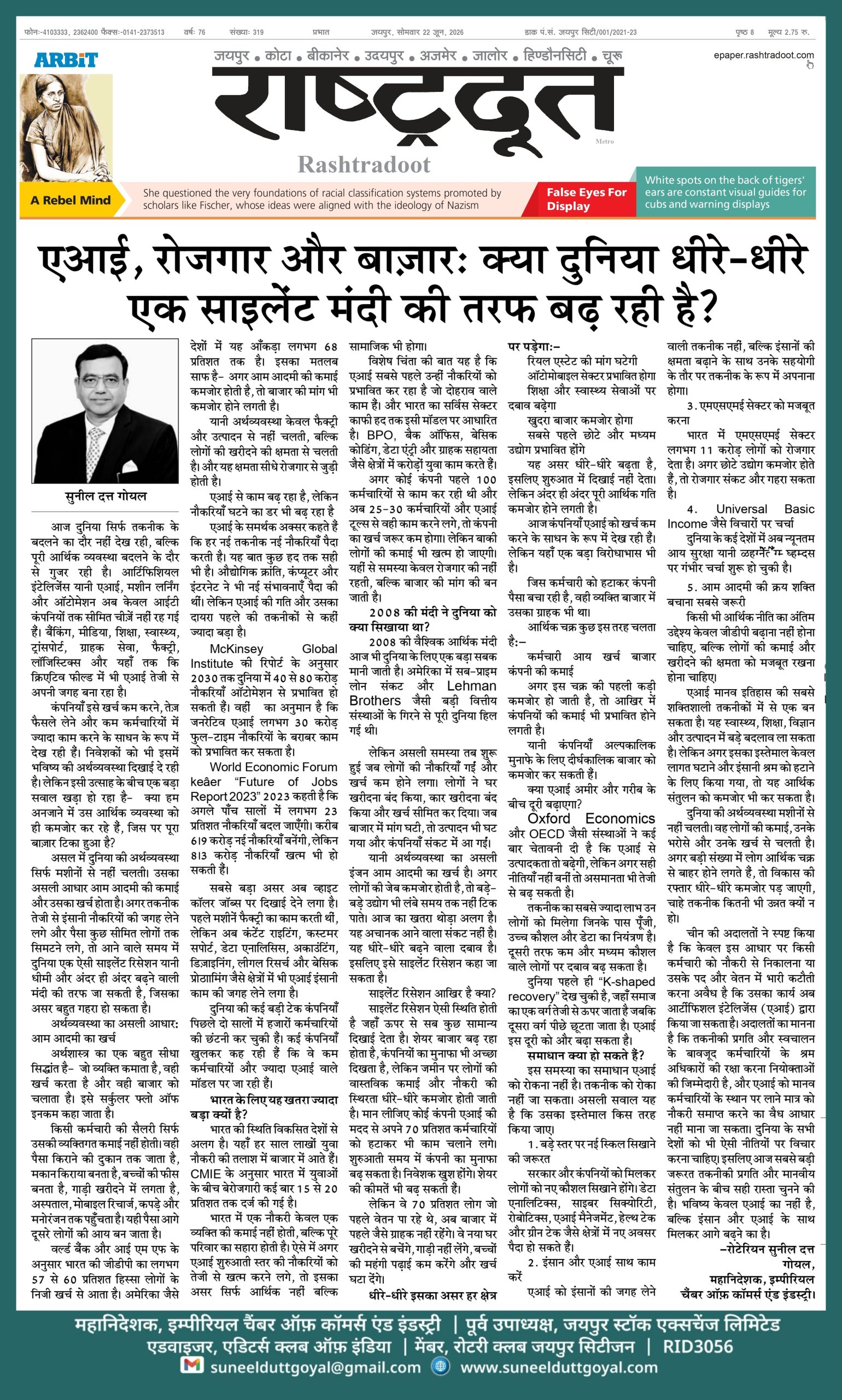
The world is not just witnessing a technological transformation; it is going through a fundamental shift in the global economic system. Artificial Intelligence (AI), Machine Learning, and Automation are no longer technologies limited to IT companies. They are rapidly expanding into banking, media, education, healthcare, transportation, customer service, manufacturing, logistics, and even creative industries.
Companies see AI as a way to reduce costs, make faster decisions, and achieve more with fewer employees. Investors view it as the foundation of the future economy. However, amid all this excitement, an important question is emerging: Are we unintentionally weakening the very economic system on which markets depend?
The global economy does not run on machines alone. Its real foundation is the income and spending power of ordinary people. If technology increasingly replaces human jobs and wealth becomes concentrated among a smaller group of people, the world could gradually move toward a “silent recession”?a slow-moving economic downturn that develops beneath the surface but has deep and long-lasting consequences.
The Real Foundation of the Economy: Consumer Spending
Economics is based on a simple principle: people earn money, people spend money, and that spending keeps markets running. This is known as the Circular Flow of Income.
An employee’s salary is not just personal income. It pays for groceries, rent, children’s education, healthcare, transportation, mobile services, clothing, entertainment, and countless other expenses. That spending becomes income for someone else, creating a continuous economic cycle.
According to the World Bank and the IMF, private consumer spending contributes roughly 57% to 60% of India’s GDP. In countries such as the United States, the figure is close to 68%. The message is clear: when people’s incomes weaken, demand in the market weakens as well.
Economic growth is driven not only by factories and production but also by people’s ability to purchase goods and services. And that purchasing power is directly linked to employment.
AI Is Increasing Productivity, but Concerns About Job Losses Are Growing
Supporters of AI often argue that every major technological revolution creates new jobs. To some extent, that is true. The Industrial Revolution, computers, and the internet all created new opportunities.
However, AI differs from previous technologies in both speed and scale.
According to the McKinsey Global Institute, between 400 million and 800 million jobs worldwide could be affected by automation by 2030. Goldman Sachs estimates that Generative AI could impact work equivalent to around 300 million full-time jobs.
The World Economic Forum’s Future of Jobs Report 2023 suggests that around 23% of jobs will change over the next five years. Approximately 69 million new jobs may be created, but around 83 million jobs could disappear.
The greatest impact is now being felt in white-collar professions. Previously, machines mainly replaced manual labor in factories. Today, AI is increasingly capable of handling content writing, customer support, data analysis, accounting, design, legal research, and basic programming tasks.
Many major technology companies have laid off thousands of employees over the past two years. Some openly acknowledge that they are moving toward business models built around fewer employees and greater AI adoption.
Why the Risk Is Greater for India
India’s situation differs significantly from that of developed economies. Every year, millions of young people enter the job market seeking employment. According to CMIE data, youth unemployment in India has often ranged between 15% and 20%.
In India, one job frequently supports an entire family, not just an individual. If AI rapidly eliminates entry-level positions, the consequences will be social as well as economic.
A major concern is that AI is first affecting repetitive and process-driven work. Much of India’s service sector is built on exactly this type of employment. Millions of young Indians work in BPOs, back-office operations, basic coding, data entry, and customer support roles.
If a company that previously employed 100 workers can now achieve the same output using only 25 or 30 employees supported by AI tools, its costs may fall significantly. However, the remaining workers lose their income. At that point, the issue is no longer just employment?it becomes a problem of declining consumer demand.
What the 2008 Financial Crisis Taught the World
The global financial crisis of 2008 remains one of the most important lessons in modern economic history. Triggered by the U.S. subprime mortgage crisis and the collapse of major institutions such as Lehman Brothers, the shock spread across the world.
The real damage occurred when people lost jobs and reduced spending. Consumers stopped buying homes, postponed vehicle purchases, and cut discretionary expenses. As demand declined, production slowed, businesses suffered, and the economic downturn deepened.
The key lesson was simple: consumer spending is the true engine of the economy. When people’s purchasing power declines, even the largest industries struggle to sustain growth.
Today’s risk is somewhat different. Rather than a sudden collapse, it may emerge as a slow and gradual pressure on the economy. This is why it can be described as a “silent recession.”
What Is a Silent Recession?
A silent recession is a situation where everything appears healthy on the surface. Stock markets rise, corporate profits look strong, and economic headlines remain positive.
Yet underneath, people’s real incomes and job security gradually weaken.
Imagine a company that replaces 70% of its workforce with AI while maintaining productivity. Initially, profits may rise. Investors may celebrate. Share prices could increase.
However, those former employees are no longer consumers at the same level. They may postpone buying homes, delay vehicle purchases, reduce spending on education, and cut household expenses.
Over time, this reduced demand affects every sector:
- Real estate demand weakens.
- The automobile industry slows down.
- Education and healthcare sectors face pressure.
- Retail spending declines.
- Small and medium-sized businesses are often affected first.
Because the process unfolds gradually, the warning signs may not be immediately visible. Yet beneath the surface, economic momentum begins to weaken.
The Economic Contradiction of AI
Today, many companies view AI primarily as a cost-cutting tool. However, there is a significant contradiction.
The employee whose job is eliminated to reduce costs was also a customer.
The economic cycle works like this:
Employee ? Income ? Spending ? Market Demand ? Corporate Revenue
If the first link in that chain weakens, the final link eventually suffers as well.
In other words, companies pursuing short-term profit gains may unintentionally weaken the long-term consumer market on which their future revenues depend.
Will AI Widen the Gap Between Rich and Poor?
Organizations such as Oxford Economics and Organisation for Economic Co-operation and Development have repeatedly warned that while AI can significantly improve productivity, it may also increase inequality if appropriate policies are not implemented.
The greatest benefits of AI are likely to flow toward those who already possess capital, advanced skills, and control over valuable data. Meanwhile, low- and middle-skilled workers could face increasing economic pressure.
The world has already experienced what economists call a “K-shaped recovery,” where one segment of society advances rapidly while another falls behind. AI could potentially widen that divide further.
Possible Solutions
The solution is not to stop AI. Technological progress cannot be halted. The real question is how it should be managed.
- Large-Scale Reskilling and Upskilling
Governments and businesses must work together to equip workers with new skills. Areas such as data analytics, cybersecurity, robotics, AI management, health technology, and green technology could create significant employment opportunities.
- Human-AI Collaboration
AI should not be viewed solely as a replacement for people. It should be adopted as a tool that enhances human productivity and supports human decision-making.
- Strengthening the MSME Sector
India’s MSME sector provides employment to approximately 110 million people. If small and medium-sized enterprises weaken, the employment challenge could become significantly more severe.
- Exploring Universal Basic Income
Many countries are now seriously discussing Universal Basic Income (UBI) as a potential mechanism to ensure a minimum level of income security in an increasingly automated economy.
- Protecting Consumer Purchasing Power
The ultimate objective of economic policy should not simply be higher GDP growth. It should also focus on strengthening people’s incomes and maintaining their ability to participate in the economy as consumers.
Conclusion
AI has the potential to become one of the most powerful technologies in human history. It can transform healthcare, education, science, and productivity in remarkable ways.
However, if it is used primarily as a tool for reducing labor costs and eliminating human employment, it may also weaken economic balance.
Economies do not run on machines alone. They run on people’s earnings, confidence, and spending. If large numbers of people gradually become disconnected from the economic cycle, growth may eventually slow regardless of how advanced technology becomes.
Chinese courts have already clarified that simply replacing an employee with AI is not a valid legal reason to terminate employment or impose major reductions in salary and position. The courts have emphasized that employers remain responsible for protecting workers’ rights even as automation expands. Other countries may also need to consider similar policy approaches.
The challenge before society today is to find the right balance between technological progress and human well-being. The future does not belong to AI alone. It belongs to a world where humans and AI work together to create sustainable economic growth and shared prosperity.
Rtn. Suneel Dutt Goyal
Director General, Imperial Chamber of Commerce & Industry
Ex. Vice Chairman, Jaipur Stock Exchange Limited
Jaipur, Rajasthan, India
???, ?????? ?? ??????: ???? ?????? ????-???? ?? ???????? ????? ?? ??? ??? ??? ???
?? ?????? ????? ????? ?? ????? ?? ??? ???? ??? ???, ????? ???? ?????? ???????? ????? ?? ??? ?? ???? ??? ??? ??????????? ?????????? ???? ???, ???? ??????? ?? ??????? ?? ???? ???? ???????? ?? ????? ?????? ???? ?? ?? ???? ???????, ??????, ??????, ?????????, ???????????, ?????? ????, ????????, ??????????? ?? ???? ?? ?? ???????? ????? ??? ?? ??? ???? ?? ???? ??? ??? ??? ???
???????? ??? ???? ?? ????, ???? ????? ???? ?? ?? ??????????? ??? ?????? ??? ???? ?? ???? ?? ??? ??? ??? ??? ???? ???????? ?? ?? ????? ?????? ?? ???????????? ????? ?? ??? ??? ????? ??? ?????? ?? ??? ?? ???? ???? ???? ?? ??? ?? – ???? ?? ?????? ??? ?? ?????? ???????? ?? ?? ????? ?? ??? ???, ??? ?? ???? ?????? ???? ??? ???
??? ??? ?????? ?? ???????????? ????? ?????? ?? ???? ????? ???? ???? ???? ?? ???? ?? ???? ?? ???? ???? ???? ??? ??? ????? ???? ?? ?????? ???????? ?? ??? ???? ??? ?? ???? ??? ????? ????? ?? ?????? ???, ?? ??? ???? ??? ??? ?????? ?? ??? ???????? ??????? ???? ???? ?? ???? ?? ???? ????? ???? ???? ?? ??? ?? ???? ??, ????? ??? ???? ???? ?? ???? ???
???????????? ?? ???? ????: ?? ???? ?? ????
??????????? ?? ?? ???? ???? ???????? ?? – ?? ??????? ????? ??, ??? ???? ???? ?? ?? ??? ????? ?? ????? ??? ??? ???????? ???? ?? ????? ??? ???? ???
???? ???????? ?? ????? ????? ???? ????????? ???? ???? ????? ??? ???? ?????? ?? ????? ?? ???? ??, ???? ?????? ???? ??, ?????? ?? ??? ???? ??, ????? ?????? ??? ???? ??, ???????, ?????? ???????, ????? ?? ??????? ?? ??????? ??? ??? ???? ??? ????? ????? ?? ?? ?? ???? ???
?????? ???? ?? ?? ?? ?? ?? ?????? ???? ?? ?????? ?? ???? 57 ?? 60 ??????? ?????? ????? ?? ???? ???? ?? ??? ??? ??????? ???? ????? ??? ?? ?????? ???? 68 ??????? ?? ??? ???? ???? ??? ?? – ??? ?? ???? ?? ???? ????? ???? ??, ?? ????? ?? ???? ?? ????? ???? ???? ???
???? ???????????? ???? ???????? ?? ??????? ?? ???? ????, ????? ????? ?? ?????? ?? ?????? ?? ???? ??? ?? ?? ?????? ???? ?????? ?? ????? ???? ???
??? ?? ??? ??? ??? ??, ????? ???????? ???? ?? ?? ?? ??? ??? ??
??? ?? ?????? ????? ???? ??? ?? ?? ?? ????? ?? ???????? ???? ???? ??? ?? ??? ??? ?? ?? ??? ?? ??? ???????? ???????, ???????? ?? ??????? ?? ?? ?? ????????? ???? ?? ???? ????? ??? ?? ??? ?? ???? ????? ???? ?? ??????? ?? ???? ?????? ???? ???
McKinsey Global Institute ?? ??????? ?? ?????? 2030 ?? ?????? ??? 40 ?? 80 ????? ???????? ??????? ?? ???????? ?? ???? ???? ???? Goldman Sachs ?? ?????? ?? ?? ??????? ??? ???? 30 ????? ???-???? ???????? ?? ????? ??? ?? ???????? ?? ???? ???
World Economic Forum ?? ?Future of Jobs Report 2023? ???? ?? ?? ???? ???? ????? ??? ???? 23 ??????? ???????? ??? ??????? ???? 6.9 ????? ?? ???????? ??????, ????? 8.3 ????? ???????? ???? ?? ?? ???? ????
???? ???? ??? ?? ??????? ???? ?????? ?? ????? ???? ??? ??? ???? ?????? ???????? ?? ??? ???? ???, ????? ?? ?????? ???????, ?????? ??????, ???? ????????, ?????????, ??????????, ???? ?????? ?? ????? ???????????? ???? ????????? ??? ?? ??? ?????? ??? ?? ??? ???? ??? ???
?????? ?? ?? ???? ??? ???????? ????? ?? ????? ??? ?????? ??????????? ?? ????? ?? ???? ???? ?? ???????? ????? ?? ??? ??? ?? ?? ??? ??????????? ?? ?????? ???? ???? ???? ?? ?? ??? ????
???? ?? ??? ?? ???? ?????? ???? ????? ???
???? ?? ?????? ?????? ????? ?? ??? ??? ???? ?? ??? ????? ???? ????? ?? ???? ??? ????? ??? ??? ???? CMIE ?? ?????? ???? ??? ?????? ?? ??? ????????? ?? ??? 15 ?? 20 ??????? ?? ???? ?? ?? ???
???? ??? ?? ????? ???? ?? ??????? ?? ???? ???? ????, ????? ???? ?????? ?? ????? ???? ??? ??? ??? ??? ??? ??????? ???? ?? ???????? ?? ???? ?? ???? ???? ???, ?? ???? ??? ????? ?????? ???? ????? ??????? ?? ?????
????? ????? ?? ??? ?? ?? ?? ??? ???? ???? ?????? ???????? ?? ???????? ?? ??? ?? ?? ?????? ???? ??? ???? ?? ???? ?? ?????? ?????? ???? ?? ?? ??? ???? ?? ?????? ??? BPO, ??? ????, ????? ??????, ???? ?????? ?? ?????? ?????? ???? ????????? ??? ??????? ???? ??? ???? ????
??? ??? ????? ???? 100 ??????????? ?? ??? ?? ??? ?? ?? ?? 25-30 ??????????? ?? ??? ????? ?? ??? ??? ???? ???, ?? ????? ?? ???? ???? ?? ????? ????? ???? ????? ?? ???? ?? ???? ?? ?????? ???? ?? ?????? ???? ???????? ?? ???? ????, ????? ?????? ?? ????? ?? ?? ???? ???
2008 ?? ???? ?? ?????? ?? ???? ?????? ???
2008 ?? ??????? ?????? ???? ?? ?? ?????? ?? ??? ?? ???? ??? ???? ???? ??? ??????? ??? ??-?????? ??? ???? ?? Lehman Brothers ???? ???? ??????? ???????? ?? ????? ?? ???? ?????? ??? ?? ???
????? ???? ?????? ?? ???? ??? ?? ????? ?? ???????? ??? ?? ???? ?? ???? ???? ????? ?? ?? ?????? ??? ????, ??? ?????? ??? ???? ?? ???? ????? ?? ????? ?? ????? ??? ???? ???, ?? ??????? ?? ?? ??? ?? ???????? ???? ??? ? ????
???? ???????????? ?? ???? ???? ?? ???? ?? ???? ??? ??? ????? ?? ??? ????? ???? ??, ?? ????-???? ?????? ?? ???? ??? ?? ???? ??? ?????
?? ?? ???? ????? ??? ??? ?? ????? ??? ???? ???? ???? ??? ?? ????-???? ????? ???? ???? ??? ????? ??? ???????? ??????? ??? ?? ???? ???
???????? ??????? ???? ?? ?????
??????? ?????? ??? ?????? ???? ?? ???? ??? ?? ?? ??? ??????? ????? ???? ??? ???? ????? ??? ??? ???? ??, ???????? ?? ?????? ?? ????? ????? ??, ????? ???? ?? ????? ?? ???????? ???? ?? ????? ?? ??????? ????-???? ????? ???? ???? ???
??? ????? ??? ????? ??? ?? ??? ?? ???? 70 ??????? ??????????? ?? ????? ?? ??? ????? ???? ??????? ??? ??? ????? ?? ?????? ??? ???? ??? ?????? ??? ?????? ???? ?? ?????? ?? ??? ???? ????
????? ?? 70 ??????? ??? ?? ???? ???? ?? ??? ??, ?? ????? ??? ???? ???? ?????? ???? ??????? ?? ??? ?? ?????? ?? ??????, ????? ???? ?????, ?????? ?? ????? ????? ?? ?????? ?? ???? ??? ??????
????-???? ???? ??? ?? ??????? ?? ??????:
- ???? ?????? ?? ???? ?????
- ????????? ?????? ???????? ????
- ?????? ?? ????????? ?????? ?? ???? ??????
- ????? ????? ????? ????
- ???? ???? ???? ?? ????? ?????? ???????? ?????
?? ??? ????-???? ????? ??, ????? ?????? ??? ????? ???? ????? ????? ???? ?? ???? ???? ?????? ??? ????? ???? ???? ???
?? ???????? ??? ?? ???? ?? ???? ?? ???? ?? ??? ??? ??? ??? ???? ????? ???? ?? ???? ????????? ?? ???
??? ???????? ?? ????? ????? ???? ??? ??? ??, ??? ??????? ????? ??? ???? ?????? ?? ???
?????? ???? ??? ?? ??? ???? ??:
???????? ? ?? ? ???? ? ????? ? ????? ?? ????
??? ?? ???? ?? ???? ???? ????? ?? ???? ??, ?? ???? ??? ???????? ?? ???? ?? ???????? ???? ???? ???
???? ???????? ????????? ?????? ?? ??? ?????????? ????? ?? ????? ?? ???? ????
???? ??? ???? ?? ???? ?? ??? ???? ????????
Oxford Economics ?? OECD ???? ???????? ?? ?? ??? ??????? ?? ?? ?? ??? ?? ????????? ?? ??????, ????? ??? ??? ??????? ???? ???? ?? ??????? ?? ???? ?? ??? ???? ???
????? ?? ???? ?????? ??? ?? ????? ?? ?????? ????? ??? ?????, ???? ???? ?? ???? ?? ???????? ??? ????? ??? ?? ?? ????? ???? ???? ????? ?? ???? ??? ???? ???
?????? ???? ?? ?K-shaped recovery? ??? ???? ??, ???? ???? ?? ?? ???? ???? ?? ??? ???? ?? ???? ????? ???? ???? ????? ???? ??? ??? ?? ???? ?? ?? ???? ???? ???
?????? ???? ?? ???? ????
?? ?????? ?? ?????? ??? ?? ????? ???? ??? ????? ?? ???? ???? ?? ????? ???? ???? ?? ?? ?? ???? ???????? ??? ??? ???? ????
1. ???? ???? ?? ?? ????? ?????? ?? ?????
????? ?? ???????? ?? ????? ????? ?? ?? ???? ?????? ?????? ???? ??????????, ????? ??????????, ?????????, ??? ?????????, ????? ??? ?? ????? ??? ???? ????????? ??? ?? ???? ???? ?? ???? ????
2. ????? ?? ??? ??? ??? ????
??? ?? ??????? ?? ??? ???? ???? ????? ????, ????? ??????? ?? ?????? ?????? ?? ??? ???? ?????? ?? ??? ?? ????? ?? ??? ??? ?????? ?????
3. MSME ?????? ?? ????? ????
???? ??? MSME ?????? ???? 11 ????? ????? ?? ?????? ???? ??? ??? ???? ?????? ????? ???? ???, ?? ?????? ???? ?? ???? ???? ???
4. Universal Basic Income ???? ??????? ?? ?????
?????? ?? ?? ????? ??? ?? ??????? ?? ??????? ???? Universal Basic Income ?? ????? ????? ???? ?? ???? ???
5. ?? ???? ?? ???? ????? ????? ???? ?????
???? ?? ?????? ???? ?? ????? ???????? ???? GDP ?????? ???? ???? ?????, ????? ????? ?? ???? ?? ?????? ?? ?????? ?? ????? ???? ???? ??????
??? ???? ?????? ?? ???? ????????? ??????? ??? ?? ?? ?? ???? ??? ?? ?????????, ??????, ??????? ?? ??????? ??? ???? ????? ?? ???? ??? ????? ??? ???? ???????? ???? ???? ????? ?? ?????? ???? ?? ????? ?? ??? ???? ???, ?? ?? ?????? ?????? ?? ????? ?? ?? ???? ???
?????? ?? ???????????? ?????? ?? ???? ????? ?? ????? ?? ????, ???? ????? ?? ???? ???? ?? ???? ??? ??? ???? ?????? ??? ??? ?????? ???? ?? ???? ???? ???? ???, ?? ????? ?? ?????? ????-???? ????? ??? ?????, ???? ????? ????? ?? ????? ????? ? ???
??? ?? ??????? ?? ?????? ???? ?? ?? ???? ?? ???? ?? ???? ???????? ?? ????? ?? ??????? ?? ???? ?? ?? ???? ??? ???? ????? ???? ???? ?? ?? ???? ????? ?? ????????? ?????????? (AI) ?????? ???? ?? ???? ??? ??????? ?? ????? ?? ?? ?????? ?????? ?? ??????? ?? ?????? ??????????? ?? ???? ???????? ?? ????? ???? ?????????? ?? ?????????? ??, ?? AI ?? ???? ??????????? ?? ????? ?? ???? ????? ?? ????? ?????? ???? ?? ??? ???? ???? ???? ?? ????? ?????? ?? ??? ????? ?? ?? ??? ??????? ?? ????? ???? ??????
????? ?? ???? ???? ????? ?????? ?????? ?? ?????? ?????? ?? ??? ??? ?????? ????? ?? ??? ?????? ???? ??? ?? ???? ??, ????? ????? ?? ??? ?? ??? ????? ??? ????? ?? ???
???????? ????? ???? ????
?????????, ????????? ????? ??? ?????? ??? ?????????,
????? ?????????, ????? ????? ???????? ???????, ?????, ????????