
Patriotism · National Symbols of India
The State Emblem of India
The official seal of the Government of India — its description, and exactly which authorities may use it, on seals, on stationery and on vehicles, as laid down in the Act of 2005 and the Rules of 2007.
- What it isOfficial seal of the Government of India
- Adapted fromSarnath Lion Capital of Asoka
- MottoSatyameva Jayate
- Governed byAct of 2005 & Rules of 2007
Description and design
The Schedule to the State Emblem of India (Prohibition of Improper Use) Act, 2005 sets out the official description and design of the emblem:
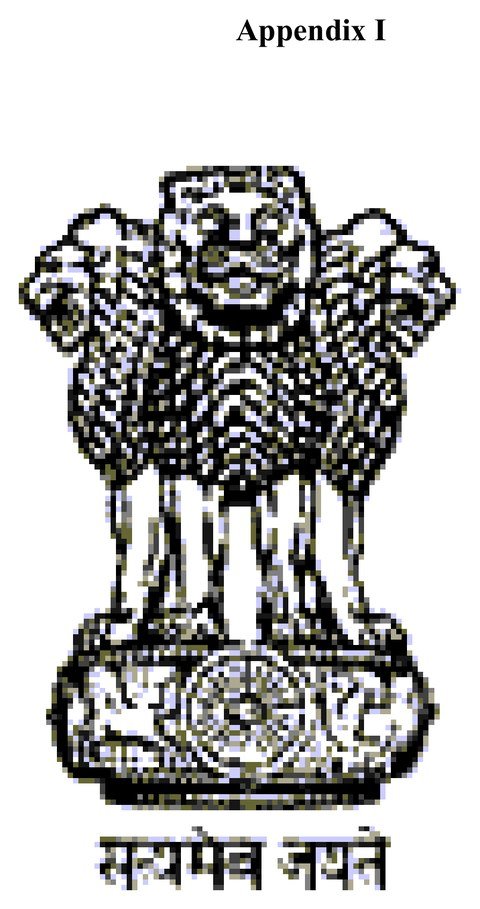
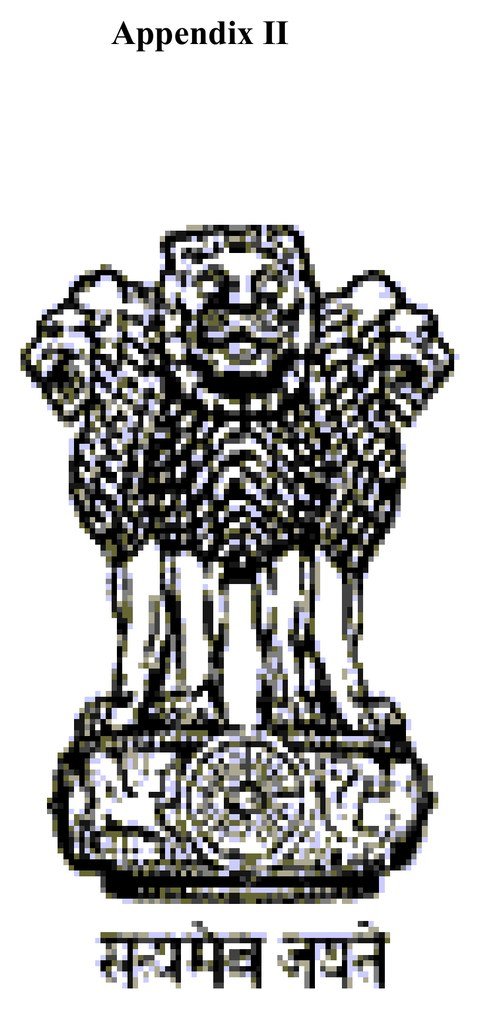
“The State Emblem of India is an adaptation from the Sarnath Lion Capital of Asoka which is preserved in the Sarnath Museum. The Lion Capital has four lions mounted back to back on a circular abacus. The frieze of the abacus is adorned with sculptures in high relief of an elephant, a galloping horse, a bull and a lion separated by intervening Dharma Chakras. The abacus rests on a bell-shaped lotus.
The profile of the Lion Capital showing three lions mounted on the abacus with a Dharma Chakra in the center, a bull on the right and a galloping horse on the left, and outlines of Dharma Chakras on the extreme right and left has been adopted as the State Emblem of India. The Bell-shaped lotus has been omitted.
The motto ‘Satyameva Jayate’ – Truth alone triumphs – written in Devanagari script below the profile of the Lion Capital is part of the State Emblem of India.”
The Schedule further provides that the State Emblem of India shall conform to the designs set out in Appendix I or Appendix II to the Act. Appendix I is a simplified form meant for reproduction in small sizes such as stationery, seals and die-printing; Appendix II is more detailed and meant for reproduction in bigger sizes.
Under Rule 12 of the 2007 Rules, photographic designs of the emblem can be obtained from the Manager, Photo Litho Wing, Government of India Press, Minto Road, New Delhi; sample standard dies of the emblem can be obtained from the Office of the Chief Controller of Printing and Stationery, New Delhi.
The motto is part of the emblem
By its circular dated 4 August 2016, the Ministry of Home Affairs recorded that the State Emblem of India is the official seal of the Government of India, and drew attention to a widespread error:
“It has been brought to notice of this Ministry that various Government agencies which are using the State Emblem of India on their stationery, publications, seals, vehicles, buildings, websites etc., often omit the motto ‘Satyameva Jayate’ and are only depicting the profile of the Lion Capital. It may be noted that the State Emblem of India is incomplete without the motto ‘Satyameva Jayate’ inscribed (in Devanagari script) below the profile of the Lion Capital. Incomplete display of the State Emblem of India is a violation of the aforesaid Act.”
The same circular records that the use of the State Emblem of India is restricted to the authorities and purposes specified in the State Emblem of India (Prohibition of Improper Use) Act, 2005 and the State Emblem of India (Regulation of Use) Rules, 2007, read with the State Emblem of India (Regulation of Use) Amendment Rules, 2010, and that strict action should be taken both for incomplete display of the emblem and against individuals or organisations using it without authority.
The Act of 2005
The State Emblem of India (Prohibition of Improper Use) Act, 2005 (No. 50 of 2005) received the assent of the President on 20 December 2005. It is “An Act to prohibit the improper use of State Emblem of India for professional and commercial purposes and for matters connected therewith or incidental thereto.” It extends to the whole of India and also applies to citizens of India outside India.
Section 3 — Prohibition of improper use of the emblem
Notwithstanding anything contained in any other law for the time being in force, no person shall use the emblem or any colourable imitation thereof in any manner which tends to create an impression that it relates to the Government or that it is an official document of the Central Government, or as the case may be, the State Government, without the previous permission of the Central Government or of such officer of that Government as may be authorised by it in this behalf.
Explanation — For the purposes of this section, “person” includes a former functionary of the Central Government or the State Governments.
Section 4 — Prohibition of use of the emblem for wrongful gain
No person shall use the emblem for the purpose of any trade, business, calling or profession or in the title of any patent, or in any trade mark or design, except in such cases and under such conditions as may be prescribed.
Section 5 — Prohibition of registration of certain companies, etc.
No competent authority shall register a trade mark or design which bears the emblem, or grant a patent in respect of an invention which bears a title containing the emblem. If a question arises before a competent authority whether any emblem is an emblem specified in the Schedule or a colourable imitation of it, the question is referred to the Central Government, whose decision is final.
Section 7 — Penalty
| Contravention | Punishment |
|---|---|
| Section 3 — improper use of the emblem | Imprisonment which may extend to two years, or fine which may extend to five thousand rupees, or both. |
| Section 3 — second or subsequent conviction | Imprisonment of not less than six months, which may extend to two years, and fine which may extend to five thousand rupees. |
| Section 4 — use of the emblem for any wrongful gain | Imprisonment of not less than six months, which may extend to two years, and fine which may extend to five thousand rupees. |
Section 8. No prosecution for any offence punishable under the Act shall be instituted except with the previous sanction of the Central Government or of any officer authorised in this behalf by general or special order of the Central Government.
Section 10. The provisions of the Act, or any rule made under it, have effect notwithstanding anything inconsistent contained in any other enactment or instrument having effect by virtue of such enactment.
The Rules of 2007
The State Emblem of India (Regulation of Use) Rules, 2007 were notified by the Ministry of Home Affairs on 4 October 2007 (G.S.R. 643(E)) in exercise of the powers conferred by section 11 of the Act. They extend to the whole of India and also to citizens of India outside India.
- Rule 3 — Design of the official seal. The design of the official seal shall have the emblem enclosed in an oval or round frame. The name of the Ministry or the office shall appear between the inner and outer rims of the frame. An abbreviated form of the name may be inscribed where it is not possible to accommodate the name in full.
- Rule 4 — Adoption by States or Union territories. A State Government may adopt the emblem as the official Emblem of the State or the Union territory without obtaining the approval of the Central Government. Where a State Government proposes to incorporate the emblem or any part of it in the Emblem of that State or Union territory, it shall do so after obtaining the prior approval of the Central Government, and shall get the design and lay out approved by the Central Government.
- Rule 5 — Use in official seals. Restricted to the authorities specified in Schedule I.
- Rule 6 — Use on stationery. Use of the emblem on official or demi-official stationery is restricted to the authorities specified in Schedule I. When printed or embossed on such stationery, the emblem shall appear prominently on the middle of the top of the stationery.
- Rule 7 — Display on vehicles. Restricted to the authorities specified in Schedule II.
- Rule 8 — Display on public buildings. See below.
- Rule 9 — Use for various other purposes. The emblem may be used for the other purposes specified in Schedule III.
Schedule I — official seals and stationery
Schedule I (see rules 5 and 6) lists the “Constitutional or Statutory Authorities, Ministries or Departments of the Central Government, State Governments or Union Territory Administrations and other Government Functionaries which may use the Emblem.”
| Entry | Authority |
|---|---|
| (i) | President, Vice-President, Prime Minister and a Union Minister |
| (ii) | Governors, Lieutenant Governors, Administrators, if the emblem is adopted by, or incorporated in the Emblem of, that State or the Union Territory, as the case may be |
| (iii) | Office and officers of the Parliament of India |
| (iv) | Judges and office and officers of the Judiciary |
| (v) | Office and officers of the Planning Commission |
| (vi) | Chief Election Commissioner of India, Election Commissioners and the office and officers of the Election Commission of India |
| (vii) | Comptroller and Auditor General of India, the office and officers of the Comptroller and Auditor General of India |
| (viii) | Chairperson and Members of the Union Public Service Commission and the office and officers of the Union Public Service Commission |
| (ix) | Ministries, Departments and offices of the Central Government and their officers |
| (x) | Diplomatic Missions abroad and their officers |
| (xi) | Chief Ministers and Ministers of the States and the Union territories, if the emblem is adopted by, or incorporated in the Emblem of, that State or the Union territory |
| (xii) | Members of Parliament and members of State or the Union territory Legislative Assemblies or Councils, as the case may be |
| (xiii) | Ministries, Departments and offices of the State and the Union territory Governments and their officers, if the emblem is adopted by, or incorporated in the Emblem of, that State or the Union territory |
| (xiv) | Office and officers of the State or the Union territory Legislative Assemblies or Councils, if the emblem is adopted by, or incorporated in the Emblem of, that State or the Union territory |
| (xv) | Commissions and authorities, constituted or established by an Act of Parliament or set up by the Central Government |
| (xvi) | Commissions and authorities constituted or established by an Act of the State Legislature or set up by the State Government, if the emblem is adopted by, or incorporated in the Emblem of, that State or the Union territory |
“For the purpose of this Schedule, the expression ‘officer’ shall mean a gazetted officer of the Central Government, or the State Government or the Union territory Administration.”
Schedule II — display on cars
Schedule II (see rule 7) is in two parts. Part I governs display of the full State Emblem on cars. Part II governs display of the Ashoka Chakra, which is part of the emblem, on triangular metal plaques on cars. The two lists are quite different, and both are exhaustive.
Part I — Constitutional Authorities and other Dignitaries which may display the Emblem on their cars
| Entry | Vehicle and occasion |
|---|---|
| (i) | Cars of Rashtrapati Bhavan, when the following dignitaries or their spouses are travelling by such vehicles: (a) President; (b) visiting Heads of foreign States; (c) visiting Vice-Presidents of foreign State or dignitaries of equivalent status; (d) visiting heads of foreign Governments or dignitaries of equivalent status like Crown Prince or Princess of a foreign State; (e) the spare car following the car of the President |
| (ii) | Car of the Vice-President, when he or his spouse is travelling by such vehicle |
| (iii) | Cars of Raj Bhavan and Raj Niwas, if the emblem is adopted by, or incorporated in the Emblem of, that State or the Union territory, when the following dignitaries or their spouses are travelling by such vehicles within the State or the Union territory concerned: (a) President; (b) Vice-President; (c) Governor of the State; (d) Lieutenant Governor of the Union territory; (e) Visiting Heads of foreign States; (f) Visiting Vice-Presidents of foreign States or dignitaries of equivalent status; (g) Visiting Heads of foreign Governments or dignitaries of equivalent status |
| (iv) | Cars and other means of transport used by the Heads of India’s Diplomatic Missions in the countries of their accreditation |
| (v) | Cars and other means of transport used by the Heads of India’s Counsellor posts abroad in the countries of their accreditation |
| (vi) | Cars maintained by the Protocol Division of the Ministry of External Affairs when in use for duty with the foreign dignitaries of the rank of Cabinet Ministers and above visiting India, and Ambassadors accredited to India on ceremonial occasions |
Part II — Authorities which may display the Ashoka Chakra on triangular metal plaques on their cars
| Entry | Authority and territorial limit |
|---|---|
| (i) | Cars of the Prime Minister and Ministers of the Union, Speaker and Deputy Speaker of the Lok Sabha, Deputy Chairperson of the Rajya Sabha — when they are travelling anywhere in India |
| (ii) | Cars of the Chief Justice of India and Judges of the Supreme Court, and Chief Justices and Judges of High Courts — within their respective territories |
| (iii) | Cars of Cabinet Ministers in States, Ministers of States in States, Speakers and Deputy Speakers of the State Legislative Assemblies, Chairmen and Deputy Chairmen of Councils of States, Ministers (other than Deputy Ministers) of Union territories with Legislature, and Speakers and Deputy Speakers of Legislative Assemblies in Union territories — when they are travelling within their State or Union territory, as the case may be (if the emblem is adopted by, or incorporated in the Emblem of, the State or the Union territory) |
Schedule III — other purposes for which the emblem may be used
Schedule III (see rule 9) permits use of the emblem for the following purposes:
- Visiting cards of the functionaries or officers specified in Schedule I, for legitimate representational purpose;
- Greeting cards sent by functionaries or officers specified in Schedule I, for legitimate representational purpose;
- Official publications of the Government;
- Films and documentaries produced by the Government;
- Stamp papers;
- Government advertisements, banners, pamphlets, boards, etc.;
- Crests, flags, seats with such modification as considered necessary;
- Identity cards, licenses, permits, etc., issued by the Government;
- Websites of the Government;
- Coins, currency notes, promissory notes and postal stamps issued by the Mint or Press of the Government of India;
- Medals, Certificates and Sanads instituted by the Government;
- Invitation cards for functions of the Government;
- Representational glassware, crockery and cutlery used at the Rashtrapati Bhavan, Raj Bhavans, Raj Niwases and Indian Missions or Posts abroad;
- Badges, collars, buttons, etc., with such modifications as are considered necessary, on the uniforms of — (a) commissioned or gazetted officers of the armed forces of the Union; (b) gazetted officers of uniformed services (other than armed forces) of the Union and of such of the State Governments and Union territory Administrations that have adopted the emblem, or have incorporated the emblem in the Emblem of that State or Union territory; (c) authorised staff of Rashtrapati Bhavan and Indian Missions or Posts abroad;
- School textbooks, books on history, art or culture, or any periodical, as part of the text of a Chapter, Section, etc., for the purpose of explaining or illustrating the origin, significance or adoption of the emblem — provided that the emblem shall not be used on the front page, title or cover of such publication so as to give an impression that it is a Government publication.
Protocol by office, at a glance
The table below reads the Schedules across the offices most often asked about. It is a summary; the governing text is the Schedule entry cited in each row.
| Office | Official seal & stationery | Full emblem on car | Ashoka Chakra plaque on car | Schedule entries |
|---|---|---|---|---|
| President | Yes | Yes | — | I (i); II Pt I (i), (iii) |
| Vice-President | Yes | Yes | — | I (i); II Pt I (ii), (iii) |
| Prime Minister | Yes | No | Yes — anywhere in India | I (i); II Pt II (i) |
| Union Cabinet Minister / Minister of State | Yes | No | Yes — anywhere in India | I (i); II Pt II (i) |
| Governor / Lieutenant Governor / Administrator | If State has adopted | Raj Bhavan / Raj Niwas cars, within the State or UT, if adopted | — | I (ii); II Pt I (iii) |
| Speaker & Deputy Speaker, Lok Sabha; Deputy Chairperson, Rajya Sabha | Yes | No | Yes — anywhere in India | I (iii); II Pt II (i) |
| Chief Justice of India; Judges of the Supreme Court | Yes | No | Yes — within their territory | I (iv); II Pt II (ii) |
| Chief Justices & Judges of High Courts | Yes | No | Yes — within their territory | I (iv); II Pt II (ii) |
| Chief Minister; Cabinet Minister / Minister of State of a State | If State has adopted | No | Yes — within their State or UT, if adopted | I (xi); II Pt II (iii) |
| Speakers & Deputy Speakers of State Legislative Assemblies; Chairmen & Deputy Chairmen of Councils | If State has adopted | No | Yes — within their State, if adopted | I (xiv); II Pt II (iii) |
| Member of Parliament | Yes | No | No | I (xii) |
| Member of a State or UT Legislative Assembly or Council (MLA / MLC) | Yes, as a member; State offices additionally require the State to have adopted the emblem | No | No | I (xii), (xiv) |
| Chief Election Commissioner; Election Commissioners | Yes | No | No | I (vi) |
| Comptroller and Auditor General of India | Yes | No | No | I (vii) |
| Chairperson & Members, Union Public Service Commission | Yes | No | No | I (viii) |
| Officers of the Central Government (including IAS and IPS officers serving the Union), as gazetted officers, in their official capacity | Yes | No | No | I (ix) with the Explanation |
| Officers of State / UT Governments (including IAS and IPS officers serving a State), as gazetted officers, in their official capacity | If State has adopted | No | No | I (xiii) with the Explanation |
| Heads of India’s Diplomatic Missions and Counsellor posts abroad | Yes | Yes — in the country of accreditation | — | I (x); II Pt I (iv), (v) |
| Former Ministers, former Members of Parliament, former Members of Legislative Assemblies, former judges, retired Government officials | No | No | No | Rule 10(1) |
1. The right to use the emblem on stationery is not a right to put it on a car. Members of Parliament, Members of Legislative Assemblies and Councils, and officers of the Central and State Governments — including officers of the Indian Administrative Service and the Indian Police Service — appear in Schedule I, and so may use the emblem on official seals and on official or demi-official stationery in their official capacity. None of them appears in either Part of Schedule II. They are therefore not entitled to display the State Emblem, or the Ashoka Chakra plaque, on their vehicles.
2. Leaving office ends the entitlement. Rule 10(1) states in terms that no person other than those authorised under the Rules — “including former Ministers, former Members of Parliament, former Members of Legislative Assemblies, former judges and retired Government officials” — shall use the emblem in any manner. Section 3 of the Act reinforces this by defining “person” to include a former functionary of the Central or State Governments.
Restrictions on the use of the emblem
Rule 10 of the 2007 Rules provides:
- No person (including former functionaries of the Government, like former Ministers, former Members of Parliament, former Members of Legislative Assemblies, former judges and retired Government officials), other than those authorised under these Rules, shall use the emblem in any manner.
- No Commission or Committee, Public Sector Undertaking, Bank, Municipal Council, Panchayat Raj Institution, Parishad, non-government organisation or University, other than those authorised under these Rules, shall use the emblem in any manner.
- No association or body of persons, whether incorporated or not, shall use the emblem on their letter-heads, brochures, seats, crests, badges, house flags or for any other purpose in any manner.
- Stationery — including letter heads, visiting cards and greeting cards — with the emblem printed or embossed on it shall not bear words such as Advocate, Editor, Chartered Accountant alongside the name of the person authorised to use the emblem.
Rule 11. No person shall use or continue to use the emblem, or any colourable imitation of it, for the purpose of any trade, business, calling or profession, or in the title of any patent, or in any trade mark or design; nor shall any person continue to hold a patent so issued. The proviso permits a person or group of persons, association, body or corporate to use the emblem in connection with an event organised by it with the prior approval of the Central Government, or in connection with an event organised jointly with a Ministry or Department of the Central or State Government.
Display on public buildings
Rule 8 of the 2007 Rules provides:
- The emblem may be displayed on very important public buildings, like the Rashtrapati Bhavan, Parliament House, Supreme Court and Central Secretariat buildings.
- The emblem may be displayed on Raj Bhavan or Raj Niwas and State Legislature, High Courts and Secretariat buildings of the States or the Union Territories that have adopted the emblem or have incorporated the emblem in the Emblem of the State or the Union Territory.
- The emblem may be displayed on the premises of India’s Diplomatic Missions abroad, and the heads of Missions may display the emblem at their residences in the countries of their accreditation.
- The emblem may be displayed on the buildings occupied by India’s Consulates abroad at the entrance doors thereof, and on the residences of Heads of consular posts in the countries of their accreditation.
The Emblems and Names (Prevention of Improper Use) Act, 1950
The 2005 Act deals specifically with the State Emblem of India. It sits alongside the earlier Emblems and Names (Prevention of Improper Use) Act, 1950 (No. 12 of 1950), which covers a wider Schedule of names and emblems — the Indian National Flag among them.
Under section 3 of the 1950 Act, no person shall, except in such cases and under such conditions as may be prescribed by the Central Government, use or continue to use, for the purpose of any trade, business, calling or profession, or in the title of any patent, or in any trade mark or design, any name or emblem specified in the Schedule or any colourable imitation thereof, without the previous permission of the Central Government or of such officer of Government as may be authorised in this behalf.
Government References
Every statement on this page is drawn from the following official publications of the Government of India.
- The State Emblem of India (Prohibition of Improper Use) Act, 2005 (No. 50 of 2005)Ministry of Home Affairs, Government of India — complete text with the Schedule, Appendix I and Appendix II.
- The State Emblem of India (Regulation of Use) Rules, 2007G.S.R. 643(E), Ministry of Home Affairs, notified 4 October 2007; published in The Gazette of India, Extraordinary, Part II—Section 3—Sub-section (i), No. 448, New Delhi, 4 October 2007. Contains Schedules I, II and III.
- Display of State Emblem of IndiaMinistry of Home Affairs (Public Section), No. 15/3/2016-Public, circular dated 4 August 2016, with the Act and Rules enclosed.
- National Flag, Emblem and AnthemMinistry of Home Affairs — the Ministry’s official document index for the national symbols.
The text on this page reproduces or closely paraphrases the provisions of the documents listed above. Schedule entries are cited by their numbering in the State Emblem of India (Regulation of Use) Rules, 2007. The Ministry of Home Affairs circular dated 4 August 2016 records that those Rules are to be read with the State Emblem of India (Regulation of Use) Amendment Rules, 2010. This page is offered for public information and does not replace the official publications; in case of any difference, the documents issued by the Government of India shall prevail. Sources last verified on 9 September 2026.