
Patriotism · National Symbols of India
Rashtragaan & Rashtra Geet
Jana Gana Mana and Vande Mataram — the official texts as issued by the Ministry of Home Affairs, with their meaning, their history, and the orders that govern when and how they are sung.
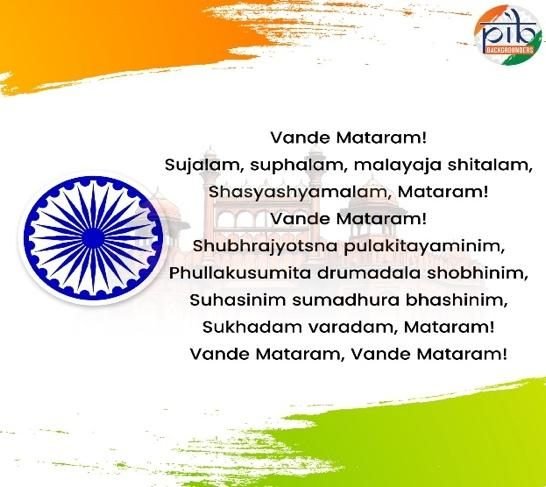
The Ministry of Home Affairs states that the correct diction and pronunciation of the National Anthem and the National Song are made available on its website, alongside the correct script and text reproduced on this page. See the Ministry’s National Flag, Emblem & Anthem document page →
- Anthem — full versionapprox. 52 seconds
- Anthem — short versionapprox. 20 seconds
- National Songapprox. 3 min 10 sec
- Adopted24 January 1950
Equal status, and the order of singing
On 24 January 1950, Dr. Rajendra Prasad made a statement to the Constituent Assembly settling the question of the National Anthem. In the Constituent Assembly there was absolute unanimity over adopting both Jana Gana Mana and Vande Mataram as national symbols, and there was no debate on the issue. Dr. Prasad said:
“There is one matter which has been pending for discussion, namely the question of the National Anthem. At one time it was thought that the matter might be brought up before the House and a decision taken by the House by way of a resolution. But it has been felt that, instead of taking a formal decision by means of a resolution, it is better if I make a statement with regard to the National Anthem. Accordingly I make this statement.
The composition consisting of the words and music known as Jana Gana Mana is the National Anthem of India, subject to such alterations in the words as the Government may authorise as occasion arises; and the song Vande Mataram, which has played a historic part in the struggle for Indian freedom, shall be honoured equally with Jana Gana Mana and shall have equal status with it. (Applause). I hope this will satisfy the Members.”
Paragraph IV(2) of the Orders relating to the National Song provides: “When the National Song and the National Anthem are sung or played, National Song will be sung or played first.”
The Ministry’s letter of 9 July 2026 reiterates this for strict compliance, and adds that in States where a State Song is also sung or played along with the National Anthem or National Song, both the National Song and the National Anthem shall be sung or played together — the National Song first, followed by the National Anthem.
The same letter directs that while singing or playing the National Song and the National Anthem, their correct script or text and diction or pronunciation should be followed strictly.
Rashtragaan — Jana Gana Mana
The Orders relating to the National Anthem of India state: “The composition consisting of the words and music of the first stanza of the late poet Rabindra Nath Tagore’s song known as ‘Jana-Gana-Mana’ is the National Anthem of India.”
Official text — Devanagari
जन-गण-मन अधिनायक जय हे
भारत भाग्य विधाता ।
पंजाब-सिन्धु-गुजरात-मराठा
द्राविड़-उत्कल-बंग
विंध्य हिमाचल यमुना गंगा
उच्छल जलधि तरंग
तब शुभ नामे जागे, तब शुभ आशिष मांगे
गाहे तब जय-गाथा ।
जन-गण-मंगलदायक जय हे भारत भाग्य विधाता ।
जय हे, जय हे, जय हे, जय जय जय जय हे ।
Official text — Roman transliteration
Jana-gaṇa-mana-adhināyaka jaya he
Bhārata-bhāgya-vidhātā.
Panjāba-Sindhu-Gujarāta-Marāthā
Drāvida-Utkala-Banga
Vindhya-Himāchala-Yamunā-Gangā
uchchhala-jaladhi-taranga
Tava shubha nāmē jāgē, tava shubha aashish māngē,
gāhē tava jaya-gāthā.
Jana-gaṇa-mangala-dāyaka jaya he
Bhārata-bhāgya-vidhātā.
Jaya hē, Jaya hē, Jaya hē,
Jaya jaya jaya jaya hē.
English meaning
Thou art the ruler of the minds of all people, dispenser of India’s destiny.
Thy name rouses the hearts of the Punjab, Sindh, Gujarat and Maratha, of the Dravida, Utkala and Banga;
it echoes in the hills of the Vindhyas and the Himalayas, mingles in the music of the Yamuna and the Ganga, and is chanted by the waves of the surging sea.
They pray for thy blessings and sing thy praise.
The saving of all people waits in thy hand, thou dispenser of India’s destiny.
Victory, victory, victory to thee.
The Orders issued by the Ministry of Home Affairs prescribe the text of the Anthem and its music. They do not prescribe an English translation. The rendering above is given only to convey the sense of the words; the authoritative text is the one set out in the Orders and reproduced above it.
Hindi meaning — भावार्थ
तुम समस्त जनगण के मन के अधिनायक हो, भारत के भाग्य के विधाता हो। पंजाब, सिन्धु, गुजरात, मराठा, द्राविड़ (दक्षिण भारत), उत्कल (ओडिशा) और बंग (बंगाल) — इन सब प्रदेशों में तुम्हारा शुभ नाम गूँजता है। विंध्य और हिमाचल के पर्वत, यमुना और गंगा की धाराएँ, तथा उमड़ते हुए सागर की लहरें भी तुम्हारी ही जय-गाथा गाती हैं। वे तुम्हारे शुभ नाम पर जागती हैं और तुमसे शुभ आशीष माँगती हैं। हे जन-गण के मंगलदाता, हे भारत के भाग्य विधाता, तुम्हारी जय हो।
The Ministry of Home Affairs’ Orders do not prescribe a Hindi paraphrase of the Anthem, only the Devanagari text itself (reproduced above) and its meaning in English. The भावार्थ above is a plain-language Hindi rendering prepared for this page, checked against the sense of the official Devanagari text and cross-checked against Hindi Wikipedia’s article on जन गण मन. It is offered for readers’ convenience and is not a Government of India publication.
The full version of the Anthem has a playing time of approximately 52 seconds.
A recording on YouTube, provided here for convenience. It is not itself a Government of India publication — the authoritative text is the one set out above from the Ministry of Home Affairs’ Orders.
The short version
A short version consisting of the first and last lines of the National Anthem is also played on certain occasions:
जन-गण-मन अधिनायक जय हे
भारत-भाग्य-विधाता ।
जय हे, जय हे, जय हे, जय जय जय जय हे ॥
Jana-gaṇa-mana-adhināyaka jaya he
Bhārata-bhāgya-vidhātā.
Jaya hē, Jaya hē, Jaya hē,
Jaya jaya jaya jaya hē.
The playing time of the short version is about 20 seconds. The short version of the Anthem shall be played when drinking toasts in Messes.
When the Anthem is played
The full version of the Anthem shall be played on the following occasions:
- Civil and Military investitures;
- When National Salute — which means the Command for ‘Rashtriya Salute – Salami Shastr’ to the accompaniment of the National Anthem — is given on ceremonial occasions to the President or to the Governor or Lieutenant Governor within their respective States or Union Territories;
- During parades, irrespective of whether any of the dignitaries referred to above is present or not;
- On arrival of the President at formal State functions and other functions organised by the Government and mass functions, and on his departure from such functions;
- Immediately before and after the President addresses the Nation over All India Radio;
- On arrival of the Governor or Lieutenant Governor at formal State functions within his State or Union Territory, and on his departure from such functions;
- When the National Flag is brought on parade;
- When the Regimental Colours are presented;
- For hoisting of colours in the Navy.
The Anthem shall be played on any other occasion for which special orders have been issued by the Government of India.
“Normally the Anthem shall not be played for the Prime Minister, though there may be special occasions when it may be played.”
When the National Anthem is played by a band, the Anthem will be preceded by a roll of drums to assist the audience to know that the National Anthem is going to be played — unless there is some other specific indication, as for example when fanfares are sounded, when toasts are drunk to the accompaniment of the Anthem, or when the Anthem constitutes the National Salute given by a Guard of Honour. The duration of the roll, in terms of marching drill, will be 7 paces in slow march. The roll will start slowly, ascend to as loud a volume as possible and then gradually decrease to original softness, but remain audible until the seventh beat. One beat rest will then be observed before commencing the National Anthem.
Mass singing of the Anthem
The full version of the Anthem shall be played accompanied by mass singing on the following occasions:
- On the unfurling of the National Flag, on cultural occasions or ceremonial functions other than parades. This could be arranged by having a choir of adequate size, suitably stationed, trained to coordinate its singing with the band; there should be an adequate public audition system so that the gathering in the various enclosures can sing in unison with the choir.
- On arrival of the President at any Government or Public function (but excluding formal State functions and mess functions), and also immediately before his departure from such functions.
On all occasions when the National Anthem is sung, the full version only shall be recited in mass singing.
The Anthem may be sung on occasions which, although not strictly ceremonial, are nevertheless invested with significance because of the presence of Ministers and others; singing on such occasions, with or without instruments, accompanied by mass singing, is desirable. It is not possible to give an exhaustive list of occasions on which the singing of the Anthem can be permitted, but there is no objection to it so long as it is done with due respect as a salutation to the motherland and proper decorum is maintained.
In schools, the day’s work may begin with community singing of the Anthem. School authorities should make adequate provision in their programmes for popularising the singing of the Anthem and promoting respect for the National Flag among students.
Playing of foreign anthems
- At receptions to foreign dignitaries in India at which the giving of National Salute has been prescribed, the full version of the National Anthem of the visiting dignitary’s country should be played first, followed by the full version of the National Anthem of India.
- At dramatic, film or other cultural festivals organised by a diplomatic or consular representative of a foreign country in India, the foreign Anthem should be played first, followed immediately by the Indian Anthem.
- At functions arranged by foreign Missions celebrating their National Days, if the President of India is represented by a Chief Guest not below the rank of a Cabinet Minister of the Central Government, or by the Lieutenant Governor of Delhi where the function is held in Delhi, the National Anthem of India may be played first, followed by the Anthem of the host country.
When the National Anthem is required to be played immediately before or after the National Anthem of a foreign country, there should be no simultaneous singing of the National Anthem. However, mass singing of the National Anthem should be required when it is played immediately before or after the Anthem of another country in the event that the visiting dignitary and his delegation are singing their own National Anthem.
Rashtra Geet — Vande Mataram
The Orders relating to the National Song of India state: “The song ‘Vande Mataram’ written by Shri Bankim Chandra Chatterjee is known as ‘National Song’.” The official version, as issued by the Ministry of Home Affairs, is the complete song reproduced below. Its playing time is approximately 3 minutes 10 seconds.
Official version — Roman transliteration
Vandē Mātaraṃ, Vandē Mātaraṃ.
Sujalāṃ suphalāṃ malayaja-sheetalāṃ,
Shasya-Shyāmalāṃ Mātaraṃ.
Vandē Mātaraṃ.
Shubhra-jyotsnā pulakita-yāminēṃ,
Phulla-kusumita druma-dala-shobhinēṃ,
Suhāsinēṃ sumadhura-bhāshinēṃ,
Sukhadāṃ varadāṃ Mātaraṃ.
Vandē Mātaraṃ.
Koti-koti kantha kal-kal nināda karālē,
Koti-koti bhujairdhṛita kharkarvālē,
Ke bole Mā tumi abale,
Bahubaladhāriṇeeṃ namāmi tāriṇeeṃ,
Ripudala-vāriṇeeṃ Mātaraṃ.
Vandē Mātaraṃ.
Tumi vidyā, tumi dharma,
Tumi hṛdi, tumi marma,
Tvaṃ hi prāṇāḥ shareēre
Bāhutē tumi Mā shakti,
Hṛdayē tumi Mā bhakti,
Tomārai pratima gadi mandirē-mandirē.
Vandē Mātaraṃ.
Tvaṃ hi Durgā dasha-praharana-dhāriṇee,
Kamalā kamala-dala-vihāriṇee,
Vāṇee vidyā-dāyinēe,
Namāmi tvāṃ namāmi kamalāṃ,
Amalāṃ atulāṃ,
Sujalāṃ suphalāṃ Mātaraṃ.
Vandē Mātaraṃ.
Shyāmalāṃ saralāṃ susmitāṃ bhūshitāṃ,
Dharaṇeeṃ bharaṇeeṃ Mātaraṃ.
Vandē Mātaraṃ, Vandē Mātaraṃ.
Devanagari
वन्दे मातरम्, वन्दे मातरम्।
सुजलां सुफलां मलयजशीतलाम्,
शस्यश्यामलां मातरम्।
वन्दे मातरम्।
शुभ्रज्योत्स्ना पुलकितयामिनीम्,
फुल्लकुसुमित द्रुमदलशोभिनीम्,
सुहासिनीं सुमधुरभाषिणीम्,
सुखदां वरदां मातरम्।
वन्दे मातरम्।
कोटि-कोटि कण्ठ कल-कल निनाद कराले,
कोटि-कोटि भुजैर्धृत खरकरवाले,
के बोले मा तुमि अबले,
बहुबलधारिणीं नमामि तारिणीम्,
रिपुदलवारिणीं मातरम्।
वन्दे मातरम्।
तुमि विद्या, तुमि धर्म,
तुमि हृदि, तुमि मर्म,
त्वम् हि प्राणाः शरीरे।
बाहुते तुमि मा शक्ति,
हृदये तुमि मा भक्ति,
तोमारइ प्रतिमा गडि मन्दिरे-मन्दिरे।
वन्दे मातरम्।
त्वम् हि दुर्गा दशप्रहरणधारिणी,
कमला कमलदलविहारिणी,
वाणी विद्यादायिनी,
नमामि त्वाम् नमामि कमलाम्,
अमलाम् अतुलाम्,
सुजलां सुफलां मातरम्।
वन्दे मातरम्।
श्यामलां सरलां सुस्मितां भूषिताम्,
धरणीं भरणीं मातरम्।
वन्दे मातरम्, वन्दे मातरम्।
English meaning
I bow to thee, Mother,
richly-watered, richly-fruited,
cool with the winds of the south,
dark with the crops of the harvests,
the Mother!
Her nights rejoicing in the glory of the moonlight,
her lands clothed beautifully with her trees in flowering bloom,
sweet of laughter, sweet of speech,
the Mother, giver of boons, giver of bliss.
Terrible with the clamorous shout of seventy million throats,
and the sharpness of swords raised in twice seventy million hands,
who sayeth to thee, Mother, that thou art weak?
Holder of multitudinous strength,
I bow to her who saves,
to her who drives from her the armies of her foemen, the Mother!
Thou art knowledge, thou art conduct,
thou art heart, thou art soul,
for thou art the life in our body.
In the arm thou art might, O Mother,
in the heart, O Mother, thou art love and faith,
it is thy image we raise in every temple.
For thou art Durga holding her ten weapons of war,
Kamala at play in the lotuses,
and Speech, the goddess, giver of all lore;
to thee I bow!
I bow to thee, goddess of wealth,
pure and peerless,
richly-watered, richly-fruited,
the Mother!
I bow to thee, Mother,
dark-hued, candid,
sweetly smiling, jewelled and adorned,
the holder of wealth, the lady of plenty,
the Mother!
The authoritative text of the National Song is the version set out in the Orders issued by the Ministry of Home Affairs, reproduced above in the transliteration in which the Ministry prints it. The Devanagari is given as a rendering of that official text for readers who prefer the script. The English is the well-known translation by Sri Aurobindo; it is not part of the official Order and is given only to convey the meaning.
Hindi meaning — भावार्थ
हे मां, मैं तुम्हें प्रणाम करता हूँ। तुम जल से परिपूर्ण, फलों से समृद्ध, दक्षिण की शीतल सुगंधित वायु से सुशीतल, और लहलहाती फसलों से श्यामल हो, हे मां।
तुम्हारी रातें चाँदनी के आनंद से रोमांचित हैं, तुम्हारी धरती फूलों से लदे वृक्षों की छटा से सुशोभित है; तुम मधुर हास और मीठी वाणी वाली हो, हे मां, तुम सुख देने वाली और वर देने वाली हो।
करोड़ों कंठों की गर्जना और करोड़ों भुजाओं में उठी तीक्ष्ण तलवारों से तुम भयंकर हो — फिर कौन कहता है, हे मां, कि तुम निर्बल हो? तुम अपार बल की धारिणी हो; मैं उस तारिणी को प्रणाम करता हूँ जो शत्रु-सेनाओं का नाश करने वाली है, हे मां।
तुम ही विद्या हो, तुम ही धर्म हो; तुम ही हृदय हो, तुम ही मर्म हो — क्योंकि तुम ही हमारे शरीर के प्राण हो। भुजाओं में तुम शक्ति हो, हे मां, हृदय में तुम भक्ति हो; तुम्हारी ही प्रतिमा हर मंदिर में प्रतिष्ठित है।
तुम ही दस अस्त्र धारण करने वाली दुर्गा हो, कमल-दल में विहार करने वाली कमला (लक्ष्मी) हो, और विद्या देने वाली वाणी (सरस्वती) हो — मैं तुम्हें प्रणाम करता हूँ, हे निर्मल, हे अतुलनीय, हे जल और फल से परिपूर्ण मां।
हे मां, मैं तुम्हें प्रणाम करता हूँ — श्यामल, सरल, मधुर मुस्कान वाली, आभूषणों से सुशोभित, धरती को धारण करने और उसका पालन-पोषण करने वाली मां।
The Ministry of Home Affairs’ Orders prescribe only the official text of the National Song (transliteration reproduced above); they do not prescribe a Hindi paraphrase. The भावार्थ above is a plain-language Hindi rendering prepared for this page from the same sense as Sri Aurobindo’s English translation, cross-checked against Hindi Wikipedia’s article on वन्दे मातरम् and भारतकोश. It is offered for readers’ convenience and is not a Government of India publication.
A recording on YouTube, provided here for convenience. It is not itself a Government of India publication — the authoritative text is the one set out above from the Ministry of Home Affairs’ Orders.
The history of Vande Mataram
The following is drawn from the Government of India’s commemorative document marking 150 years of the National Song, issued on 6 November 2025.
- Vande Mataram, which translates to “Mother, I Bow to Thee”, was composed by Bankim Chandra Chatterjee and first published in the literary journal Bangadarshan on 7 November 1875.
- It was composed independently and later incorporated in his novel Anandamath, published in 1882. The song appeared in the very first instalment of the serialisation of the novel, in the March–April 1881 issue of Bangadarshan, of which Bankim was the founder editor.
- It was set to music by Rabindranath Tagore, and was first sung by Rabindranath Tagore at the 1896 session of the Congress in Calcutta.
- At the Varanasi session of the Indian National Congress in 1905, the song was adopted for all-India occasions.
- Vande Mataram as a political slogan was first used on 7 August 1905, when thousands of students representing all communities went in procession towards the town hall in Calcutta, where the famous resolution on the boycott of foreign goods and the vow of swadeshi was adopted.
- In 1907, Madam Bhikaji Cama raised the tricolour flag for the first time outside India, at Stuttgart. The words Vande Mataram were written on that flag.
- In August 1906, an English daily titled Bande Mataram was launched under the editorship of Bipin Chandra Pal, with Sri Aurobindo later joining as joint editor.
- The British administration sought to suppress the song. The Government of the newly created province of Eastern Bengal issued circulars prohibiting the singing or chanting of Vande Mataram in schools and colleges; in November 1905 a fine of Rs 5 was imposed on each of 200 students of a school in Rangpur for chanting it.
- On 17 August 1909, when Madan Lal Dhingra was hanged in England, his last words before he went to the gallows were “Bande Mataram”.
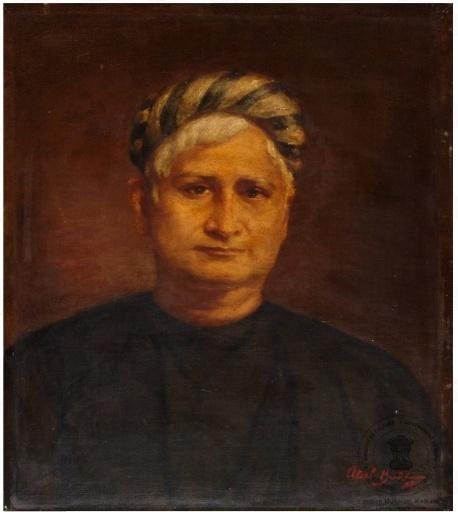
Bankim Chandra Chatterjee (1838–1894) was among the most prominent figures of nineteenth-century Bengal — a novelist, poet and essayist whose work shaped modern Bengali prose and the articulation of an emerging Indian nationalism. His notable works include Durgeshnandini (1865), Kapalkundala (1866), Anandamath (1882) and Devi Chaudhurani (1884).
When the National Song is played
The official version of the National Song shall be played on the following occasions:
- Civil Investitures;
- On arrival of the President at formal State functions and other functions organised by the Government, and on his departure from such functions;
- Immediately before and after the President addresses the Nation over All India Radio and Television;
- On arrival of the Governor or Lieutenant Governor at formal State functions within his State or Union Territory, and on his departure from such functions;
- When the National Flag is brought on parade.
The National Song shall be played on any other occasion for which special orders are issued by the Government of India. As with the Anthem, when played by a band it is preceded by a roll of drums of 7 paces in slow march, with one beat rest before the Song commences.
Mass singing of the National Song
The official version shall be played accompanied by mass singing on the unfurling of the National Flag, on cultural occasions or ceremonial functions other than parades, and on the arrival of the President at any Government or Public function (excluding formal State functions) and immediately before his departure. Printed lyrics of the official version may be circulated amongst the participants wherever required.
On all occasions when the National Song is sung, the official version only shall be recited in mass singing. In all schools, the day’s work may begin with community singing of the National Song.
Decorum and the law
Standing to attention. Whenever the Anthem is sung or played, the audience shall stand to attention. The same applies whenever the official version of the National Song is sung or played. However, when in the course of a newsreel or documentary the Anthem or the Song is played as part of the film, it is not expected of the audience to stand, as standing may interrupt the exhibition of the film and may create disorder and confusion rather than add to the dignity of the Anthem or the Song.
Restraint. As in the case of the flying of the National Flag, it has been left to the good sense of the people not to indulge in indiscriminate singing or playing of the Anthem.
“Whoever intentionally prevents the singing of the Indian National Anthem or causes disturbances to any assembly engaged in such singing shall be punished with imprisonment for a term, which may extend to three years, or with fine, or with both.”
Under section 3A, whoever, having already been convicted of an offence under section 2 or section 3, is again convicted of any such offence shall be punishable for the second and for every subsequent offence with imprisonment for a term which shall not be less than one year.
Government References
Every statement of law, protocol and official text on this page is drawn from the following official publications of the Government of India. The Hindi “भावार्थ” boxes are a separate, clearly-marked exception — the Government does not publish a Hindi paraphrase of either song, so those boxes are a plain-language rendering prepared for this page and cross-checked against Hindi Wikipedia and भारतकोश, cited inline where they appear.
- Orders relating to singing or playing of the National Song and the National Anthem of IndiaMinistry of Home Affairs (Public Section), No. 14/2/2025-Public, dated 9 July 2026, with Annexure I (Orders relating to the National Song of India) and Annexure II (Orders relating to the National Anthem of India).
- Orders relating to the National Song of IndiaMinistry of Home Affairs, Government of India — official version of Vande Mataram, playing time, and occasions.
- Orders relating to the National Anthem of IndiaMinistry of Home Affairs (Public Section), Government of India — full and short versions, occasions, mass singing, foreign anthems and general decorum.
- भारत के राष्ट्र गान के संबंध में आदेश (Orders relating to the National Anthem of India — Hindi)Ministry of Home Affairs, Government of India — source of the Devanagari text of the National Anthem reproduced on this page.
- 150 Years of Vande Mataram — A Melody That Became a MovementGovernment of India, issued through the Press Information Bureau, 6 November 2025 — source of the history of the National Song and of the statement of Dr. Rajendra Prasad of 24 January 1950 quoted on this page.
- The Prevention of Insults to National Honour Act, 1971 (No. 69 of 1971)As amended in 2003 and 2005. Hosted by the Ministry of Home Affairs.
- Constituent Assembly of India Debates — historical debates archiveParliament of India — the official record of the Constituent Assembly, including the sitting of 24 January 1950 at which Dr. Rajendra Prasad made his statement on the National Anthem and the National Song.
- National Flag, Emblem and AnthemMinistry of Home Affairs — the Ministry’s official document index, which also carries the correct diction and pronunciation of the National Song and the National Anthem.
The texts of the National Anthem and the National Song on this page are reproduced from the Orders issued by the Ministry of Home Affairs. The English renderings are provided only to convey the meaning and do not form part of those Orders. This page is offered for public information and does not replace the official publications; in case of any difference, the documents issued by the Government of India shall prevail. Sources last verified on 9 September 2026.