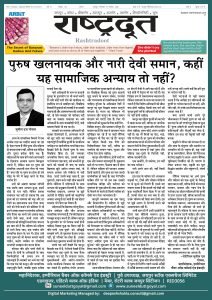

Men Are Villains and Women Are Goddesses: Is This Another Form of Social Injustice?
Is It Fair to Portray Men as Villains in the Name of Gender Equality?
An unusual trend is emerging in today’s social discourse. It increasingly feels as though men and women are no longer being treated as two equal human beings, but rather as one victimized group and one that is always to blame.
Speaking out against atrocities committed against women is absolutely necessary. But is it fair to treat every man as a potential criminal? Is being a husband or simply being a man enough to put someone under suspicion?
There is no denying that women have faced injustice for centuries in the name of being the weaker sex. But the solution cannot be to turn men into the root cause of every problem or the villain in every relationship.
In our attempt to portray women as goddesses, we have also taken away their ordinary human identity. At different times, society has called women helpless, then goddesses, and then symbols of sacrifice and selflessness.
What we really need is to let women be women, independent and respected human beings in their own right. In exactly the same way, we must stop treating men merely as earning machines, emotionally hardened individuals, or potential criminals.
A family is built by both husband and wife. Their responsibilities are just as important as their rights. Equality does not mean that one side gets legal protection and public sympathy while the other is constantly forced to defend itself.
We also need an open discussion about the misuse of legal protections introduced in the name of women’s rights. If a wife mentally or physically harasses her husband, threatens him with legal cases during marital disputes, or repeatedly disregards his emotions and self-respect, such behaviour cannot be justified in the name of feminism.
Equality means having accountability along with rights, regardless of which side is involved.
Equality means an equal share of rights, not an equal opportunity to exploit or abuse them.
This issue becomes even more important when we consider how little attention is paid to the mental harassment of men.
If a man experiences domestic abuse, is constantly insulted, has no control over his own earnings, is threatened with being separated from his children, or faces false allegations, society often refuses to take his suffering seriously.
Instead, he is told:
“You are a man. Learn to tolerate it.”
This mindset needs to change.
The media gives considerable attention to injustice against women, but the stories of men suffering from mental harassment, humiliation, or false accusations often go unheard. This double standard is equally concerning.
Domestic violence against women, dowry harassment, and sexual crimes are genuine social problems. Strong laws are necessary to address them. However, there must also be an impartial discussion about the misuse of these laws.
Marriage is not a battlefield. When a husband and wife start treating each other as opponents, the damage is not limited to them. The entire family suffers.
Children suffer the most.
Children do not understand whose side the law supports. They simply observe how their parents treat each other. Constant tension, legal battles, and mutual accusations can seriously affect their mental and emotional development.
Therefore, except in cases involving serious crimes or genuine threats to personal safety, communication, counselling, and mediation should be given priority instead of turning every marital disagreement into a legal battle.
In most democratic countries, the fundamental principle of law is equal legal protection. The Indian Constitution also guarantees equality and equal protection of the laws.
Yet, several gender-specific laws and provisions exist to protect women. The question is whether these provisions are consistently delivering justice or, in some situations, creating a gender imbalance.
The purpose of law should not be to give one gender special privileges. It should be to ensure equal justice, security, and dignity for every citizen.
There is another important question concerning both the legal system and the media.
Whether a case is genuine or false, the final verdict comes much later. However, a woman’s identity is often protected, while a man’s name can become public very quickly.
Even if he is eventually proven innocent, his social reputation and professional career may already have suffered serious damage.
Is it really fair to treat someone as guilty even before a court has delivered its judgment?
There is another aspect of the legal system worth examining.
In cases involving women, priority is often given to women’s police stations and, in some situations, female police officers or judicial officers.
Does this mean that male officers cannot be trusted to remain impartial? And if that is not the intention, why should such an arrangement not be examined from the perspective of gender equality?
After all, who listens to the man’s side of the story?
If we begin with the assumption that only a female officer can better understand a woman’s complaint, does that not risk introducing a form of bias into the process even before the investigation begins?
Today, women are progressing rapidly in education, employment, and almost every field. They are also taking leadership positions in many sectors. This is undoubtedly a positive development.
However, alongside equality, we must also ask where the limits of special privileges should lie. Protecting the rights of one group should never come at the expense of another group’s rights.
The purpose of law should not be to put men in the dock by default. It should be to provide every citizen with equal justice, security, and dignity.
Men are not a different species. Every man is also someone’s son, brother, husband, or father.
Treating every man as a potential villain is harmful to both families and society.
We need to build a society where men and women stand together as partners, not against each other as opponents.
“One kachori, two samosas, how can you ever trust these men?”
“A woman belongs to herself, she doesn’t belong to any man!”
These kinds of slogans are increasingly being heard at street protests, on television, and across social media.
This raises an important question: What direction are some young women in our society heading in? What kind of mindset are they developing, and where might this take them in the future?
I don’t think I need to elaborate further on that.
Recently, during one such protest, a video went viral showing a large number of women chanting these slogans.
Interestingly, the DJs playing the music were men, the people serving alcohol were men, and even the bouncers were men.
And these slogans were being shouted right in front of them.
So, if there is really no trust in men, why not start by removing the male bouncers and see what happens next?
If these women have such a serious problem with men, perhaps they should first go back home.
There, they will find men in their own families: their fathers, brothers, maternal grandfathers, maternal uncles, paternal grandfathers, paternal uncles, and brothers-in-law.
Why not look them straight in the eye, question them, and even slap them? Tell them openly that they are not trusted.
Incidents like these raise a fundamental question: Do these women actually want to trust men or not? And if they do not, what is the basis of this contradiction in their behaviour?
Have you ever seen or heard men raising such slogans against women throughout your life?
Men often endure their struggles and hardships quietly, even when they are travelling alone or dealing with difficult circumstances. Yet, you rarely see them resorting to such absurd generalizations.
Nature itself has designed life around the balance and cooperation between male and female.
Whether we look at human beings, animals, birds, or plants, nature has established different biological roles to ensure the continuity of life. From pollination to reproduction, the fundamental principle of nature is cooperation and balance, not conflict.
Gender equality does not mean placing men and women against each other. It means giving both equal respect, opportunities, and justice.
The purpose of feminism is not to place women above men, but to secure equal rights for women.
At the same time, a man’s dignity, mental health, self-respect, and rights as a father are equally important.
If injustice is committed against a woman, we must raise our voices. And if injustice is committed against a man, we must do the same.
Anyone who makes false allegations should be held accountable, regardless of gender.
The law must protect women, but innocent men must also receive justice.
The real objective is not the victory of men or women. It is the victory of justice.
Respecting women does not require humiliating men. That is the true foundation of equality.
Rotarian Suneel Dutt Goyal
Director General, Imperial Chamber of Commerce and Industry
Ex. Vice President, Jaipur Stock Exchange Limited
Jaipur, Rajasthan
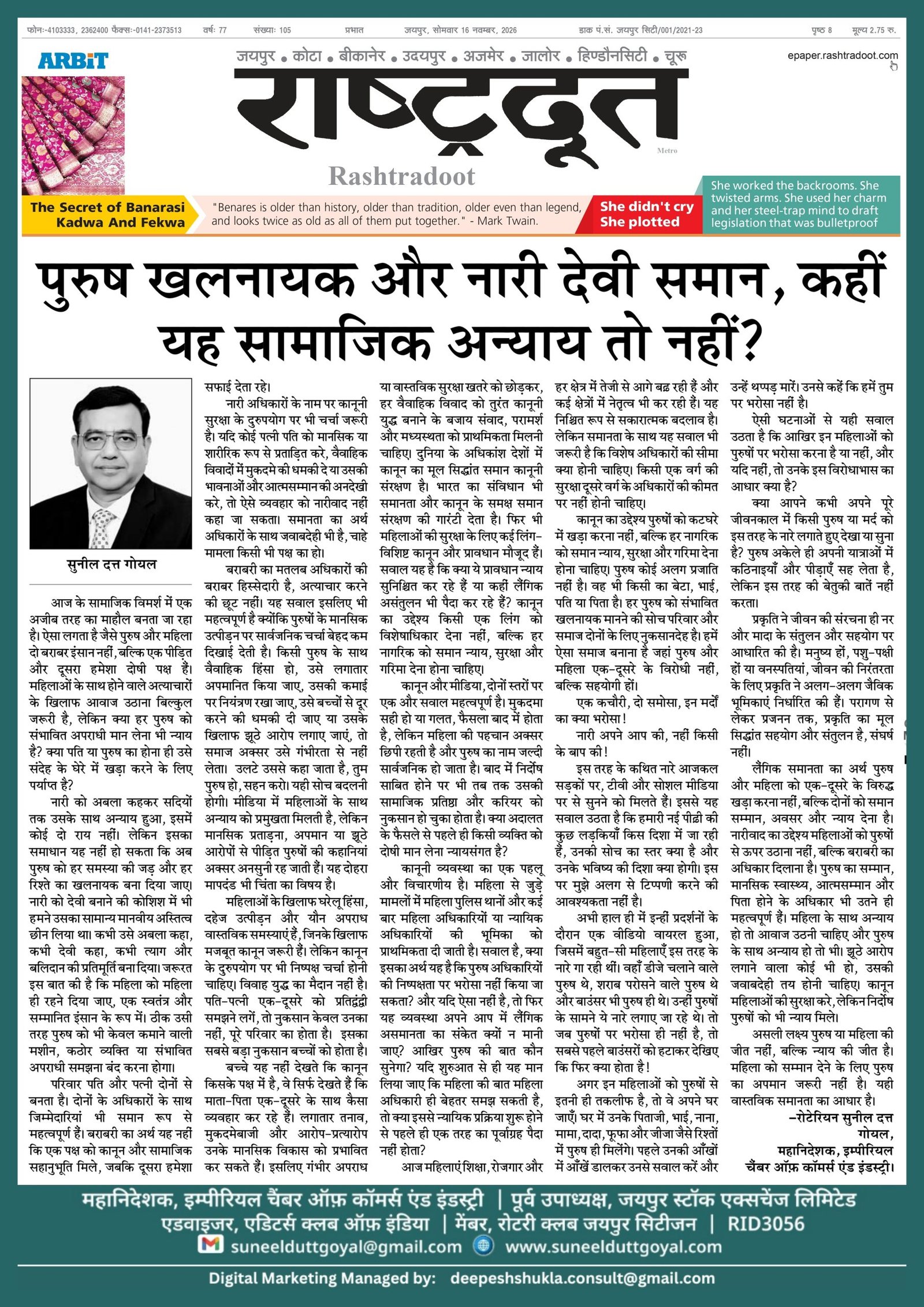
पुरुष खलनायक और नारी देवी समान, कहीं यह सामाजिक अन्याय तो नहीं ?
बराबरी के नाम पर पुरुष को खलनायक बनाना भी तो अन्याय है
आज के सामाजिक विमर्श में एक अजीब तरह का माहौल बनता जा रहा है। ऐसा लगता है जैसे पुरुष और महिला दो बराबर इंसान नहीं, बल्कि एक पीड़ित और दूसरा हमेशा दोषी पक्ष हैं। महिलाओं के साथ होने वाले अत्याचारों के खिलाफ आवाज उठाना बिल्कुल जरूरी है, लेकिन क्या हर पुरुष को संभावित अपराधी मान लेना भी न्याय है? क्या पति या पुरुष का होना ही उसे संदेह के घेरे में खड़ा करने के लिए पर्याप्त है?
नारी को अबला कहकर सदियों तक उसके साथ अन्याय हुआ, इसमें कोई दो राय नहीं। लेकिन इसका समाधान यह नहीं हो सकता कि अब पुरुष को हर समस्या की जड़ और हर रिश्ते का खलनायक बना दिया जाए। नारी को देवी बनाने की कोशिश में भी हमने उसका सामान्य मानवीय अस्तित्व छीन लिया था। कभी उसे अबला कहा, कभी देवी कहा, कभी त्याग और बलिदान की प्रतिमूर्ति बना दिया। जरूरत इस बात की है कि महिला को महिला ही रहने दिया जाए, एक स्वतंत्र और सम्मानित इंसान के रूप में। ठीक उसी तरह पुरुष को भी केवल कमाने वाली मशीन, कठोर व्यक्ति या संभावित अपराधी समझना बंद करना होगा।
परिवार पति और पत्नी दोनों से बनता है। दोनों के अधिकारों के साथ जिम्मेदारियां भी समान रूप से महत्वपूर्ण हैं। बराबरी का अर्थ यह नहीं कि एक पक्ष को कानून और सामाजिक सहानुभूति मिले, जबकि दूसरा हमेशा सफाई देता रहे।
नारी अधिकारों के नाम पर कानूनी सुरक्षा के दुरुपयोग पर भी चर्चा जरूरी है। यदि कोई पत्नी पति को मानसिक या शारीरिक रूप से प्रताड़ित करे, वैवाहिक विवादों में मुकदमे की धमकी दे या उसकी भावनाओं और आत्मसम्मान की अनदेखी करे, तो ऐसे व्यवहार को नारीवाद नहीं कहा जा सकता। समानता का अर्थ अधिकारों के साथ जवाबदेही भी है, चाहे मामला किसी भी पक्ष का हो।
बराबरी का मतलब अधिकारों की बराबर हिस्सेदारी है, अत्याचार करने की छूट नहीं।
यह सवाल इसलिए भी महत्वपूर्ण है क्योंकि पुरुषों के मानसिक उत्पीड़न पर सार्वजनिक चर्चा बेहद कम दिखाई देती है। किसी पुरुष के साथ वैवाहिक हिंसा हो, उसे लगातार अपमानित किया जाए, उसकी कमाई पर नियंत्रण रखा जाए, उसे बच्चों से दूर करने की धमकी दी जाए या उसके खिलाफ झूठे आरोप लगाए जाएं, तो समाज अक्सर उसे गंभीरता से नहीं लेता।
उलटे उससे कहा जाता है, “तुम पुरुष हो, सहन करो।”
यही सोच बदलनी होगी।
मीडिया में महिलाओं के साथ अन्याय को प्रमुखता मिलती है, लेकिन मानसिक प्रताड़ना, अपमान या झूठे आरोपों से पीड़ित पुरुषों की कहानियां अक्सर अनसुनी रह जाती हैं। यह दोहरा मापदंड भी चिंता का विषय है।
महिलाओं के खिलाफ घरेलू हिंसा, दहेज उत्पीड़न और यौन अपराध वास्तविक समस्याएं हैं, जिनके खिलाफ मजबूत कानून जरूरी हैं। लेकिन कानून के दुरुपयोग पर भी निष्पक्ष चर्चा होनी चाहिए।
विवाह युद्ध का मैदान नहीं है। पति-पत्नी एक-दूसरे को प्रतिद्वंद्वी समझने लगें, तो नुकसान केवल उनका नहीं, पूरे परिवार का होता है।
इसका सबसे बड़ा नुकसान बच्चों को होता है।
बच्चे यह नहीं देखते कि कानून किसके पक्ष में है, वे सिर्फ देखते हैं कि माता-पिता एक-दूसरे के साथ कैसा व्यवहार कर रहे हैं। लगातार तनाव, मुकदमेबाजी और आरोप-प्रत्यारोप उनके मानसिक विकास को प्रभावित कर सकते हैं। इसलिए गंभीर अपराध या वास्तविक सुरक्षा खतरे को छोड़कर, हर वैवाहिक विवाद को तुरंत कानूनी युद्ध बनाने के बजाय संवाद, परामर्श और मध्यस्थता को प्राथमिकता मिलनी चाहिए।
दुनिया के अधिकांश देशों में कानून का मूल सिद्धांत समान कानूनी संरक्षण है। भारत का संविधान भी समानता और कानून के समक्ष समान संरक्षण की गारंटी देता है। फिर भी महिलाओं की सुरक्षा के लिए कई लिंग-विशिष्ट कानून और प्रावधान मौजूद हैं। सवाल यह है कि क्या ये प्रावधान न्याय सुनिश्चित कर रहे हैं या कहीं लैंगिक असंतुलन भी पैदा कर रहे हैं? कानून का उद्देश्य किसी एक लिंग को विशेषाधिकार देना नहीं, बल्कि हर नागरिक को समान न्याय, सुरक्षा और गरिमा देना होना चाहिए।
कानून और मीडिया, दोनों स्तरों पर एक और सवाल महत्वपूर्ण है। मुकदमा सही हो या गलत, फैसला बाद में होता है, लेकिन महिला की पहचान अक्सर छिपी रहती है और पुरुष का नाम जल्दी सार्वजनिक हो जाता है। बाद में निर्दोष साबित होने पर भी तब तक उसकी सामाजिक प्रतिष्ठा और करियर को नुकसान हो चुका होता है। क्या अदालत के फैसले से पहले ही किसी व्यक्ति को दोषी मान लेना न्यायसंगत है?
कानूनी व्यवस्था का एक पहलू और विचारणीय है। महिला से जुड़े मामलों में महिला पुलिस थानों और कई बार महिला अधिकारियों या न्यायिक अधिकारियों की भूमिका को प्राथमिकता दी जाती है। सवाल है, क्या इसका अर्थ यह है कि पुरुष अधिकारियों की निष्पक्षता पर भरोसा नहीं किया जा सकता? और यदि ऐसा नहीं है, तो फिर यह व्यवस्था अपने आप में लैंगिक असमानता का संकेत क्यों न मानी जाए? आखिर पुरुष की बात कौन सुनेगा?
यदि शुरुआत से ही यह मान लिया जाए कि महिला की बात महिला अधिकारी ही बेहतर समझ सकती है, तो क्या इससे न्यायिक प्रक्रिया शुरू होने से पहले ही एक तरह का पूर्वाग्रह पैदा नहीं होता?
आज महिलाएं शिक्षा, रोजगार और हर क्षेत्र में तेजी से आगे बढ़ रही हैं और कई क्षेत्रों में नेतृत्व भी कर रही हैं। यह निश्चित रूप से सकारात्मक बदलाव है। लेकिन समानता के साथ यह सवाल भी जरूरी है कि विशेष अधिकारों की सीमा क्या होनी चाहिए। किसी एक वर्ग की सुरक्षा दूसरे वर्ग के अधिकारों की कीमत पर नहीं होनी चाहिए।
कानून का उद्देश्य पुरुषों को कटघरे में खड़ा करना नहीं, बल्कि हर नागरिक को समान न्याय, सुरक्षा और गरिमा देना होना चाहिए। पुरुष कोई अलग प्रजाति नहीं है। वह भी किसी का बेटा, भाई, पति या पिता है। हर पुरुष को संभावित खलनायक मानने की सोच परिवार और समाज दोनों के लिए नुकसानदेह है। हमें ऐसा समाज बनाना है जहां पुरुष और महिला एक-दूसरे के विरोधी नहीं, बल्कि सहयोगी हों।
“एक कचौरी, दो समोसा, इन मर्दों का क्या भरोसा!”
“नारी अपने आप की, नहीं किसी के बाप की!”
इस तरह के कथित नारे आजकल सड़कों पर, टीवी और सोशल मीडिया पर से सुनने को मिलते हैं। इससे यह सवाल उठता है कि हमारी नई पीढ़ी की कुछ लड़कियाँ किस दिशा में जा रही हैं, उनकी सोच का स्तर क्या है और उनके भविष्य की दिशा क्या होगी। इस पर मुझे अलग से टिप्पणी करने की आवश्यकता नहीं है।
अभी हाल ही में इन्हीं प्रदर्शनों के दौरान एक वीडियो वायरल हुआ, जिसमें बहुत-सी महिलाएँ इस तरह के नारे गा रही थीं। वहाँ डीजे चलाने वाले पुरुष थे, शराब परोसने वाले पुरुष थे और बाउंसर भी पुरुष ही थे। उन्हीं पुरुषों के सामने ये नारे लगाए जा रहे थे। तो जब पुरुषों पर भरोसा ही नहीं है, तो सबसे पहले बाउंसरों को हटाकर देखिए कि फिर क्या होता है!
अगर इन महिलाओं को पुरुषों से इतनी ही तकलीफ है, तो वे अपने घर जाएँ। घर में उनके पिताजी, भाई, नाना, मामा, दादा, फूफा और जीजा जैसे रिश्तों में पुरुष ही मिलेंगे। पहले उनकी आँखों में आँखें डालकर उनसे सवाल करें और उन्हें थप्पड़ मारें। उनसे कहें कि हमें तुम पर भरोसा नहीं है।
ऐसी घटनाओं से यही सवाल उठता है कि आखिर इन महिलाओं को पुरुषों पर भरोसा करना है या नहीं, और यदि नहीं, तो उनके इस विरोधाभास का आधार क्या है?
क्या आपने कभी अपने पूरे जीवनकाल में किसी पुरुष या मर्द को इस तरह के नारे लगाते हुए देखा या सुना है? पुरुष अकेले ही अपनी यात्राओं में कठिनाइयाँ और पीड़ाएँ सह लेता है, लेकिन इस तरह की बेतुकी बातें नहीं करता।
प्रकृति ने जीवन की संरचना ही नर और मादा के संतुलन और सहयोग पर आधारित की है। मनुष्य हों, पशु-पक्षी हों या वनस्पतियां, जीवन की निरंतरता के लिए प्रकृति ने अलग-अलग जैविक भूमिकाएं निर्धारित की हैं। परागण से लेकर प्रजनन तक, प्रकृति का मूल सिद्धांत सहयोग और संतुलन है, संघर्ष नहीं।
लैंगिक समानता का अर्थ पुरुष और महिला को एक-दूसरे के विरुद्ध खड़ा करना नहीं, बल्कि दोनों को समान सम्मान, अवसर और न्याय देना है। नारीवाद का उद्देश्य महिलाओं को पुरुषों से ऊपर उठाना नहीं, बल्कि बराबरी का अधिकार दिलाना है। पुरुष का सम्मान, मानसिक स्वास्थ्य, आत्मसम्मान और पिता होने के अधिकार भी उतने ही महत्वपूर्ण हैं।
महिला के साथ अन्याय हो तो आवाज उठनी चाहिए और पुरुष के साथ अन्याय हो तो भी। झूठे आरोप लगाने वाला कोई भी हो, उसकी जवाबदेही तय होनी चाहिए। कानून महिलाओं की सुरक्षा करे, लेकिन निर्दोष पुरुषों को भी न्याय मिले।
असली लक्ष्य पुरुष या महिला की जीत नहीं, बल्कि न्याय की जीत है। महिला को सम्मान देने के लिए पुरुष का अपमान जरूरी नहीं है। यही वास्तविक समानता का आधार है।
रोटेरियन सुनील दत्त गोयल
महानिदेशक, इम्पीरियल चैंबर ऑफ़ कॉमर्स एंड इंडस्ट्री
पूर्व उपाध्यक्ष, जयपुर स्टॉक एक्सचेंज लिमिटेड
जयपुर, राजस्थान