There exists a deep and concerning contradiction in our society. On one hand, we glorify doctors by calling them “a form of God,” yet on the other hand, in practice, we hesitate to value their effort, knowledge, and time. This contradiction is not just a gap between words and actions – it reflects a mindset where we fail to understand the difference between service and professional value.
First, it is important to understand that becoming a doctor is not like earning a regular degree. It is a long, difficult, and highly competitive journey that involves 15 to 20 years of continuous study, training, and mental pressure. A student must first clear a tough exam like NEET, where lakhs of students compete for limited seats. After that comes 5.5 years of MBBS, which includes both theoretical learning and practical training along with internship.
But the journey doesn’t end there. Even after becoming a general doctor, if someone wants to specialize, they must pursue post-graduation (MD/MS), which again involves intense competition. Many doctors go further into super-specialization (DM/MCh), making their total preparation time stretch up to 15–20 years.
This entire process is not just time-consuming – it also requires massive financial investment. Students in government colleges may get some relief, but in private medical colleges, fees can range from lakhs to crores. Many families invest their life savings, sell property, or take loans to make their children doctors.
This investment is not just financial – it is a sacrifice of time, mental peace, social life, and youth.
Now the question arises: after such immense sacrifice and investment, when that person finally becomes a doctor and serves society, do they receive the respect they truly deserve?
The reality is quite the opposite. Many sections of society see doctors as “service providers,” but hesitate to accept them as “professionals.”
The local grocery shopkeeper charges a doctor full price for every item, yet feels entitled to free medical advice. A tuition teacher takes full fees but expects health consultations from a doctor without paying. Even household staff, acquaintances, and relatives often expect doctors to be available for free.
This mindset does not just reflect economic imbalance – it shows that we fail to value a doctor’s knowledge and time.
Everyone wants to benefit from a doctor, but no one wants to pay for that expertise.
And the irony doesn’t stop here. When a doctor visits another professional – be it a lawyer, engineer, shopkeeper, or anyone else – they are charged full fees, sometimes even more.
So, society wants free services from doctors, but expects doctors to pay full price for everything else. We fail to realize that repair service providers charge up to ₹1000 for a single visit, yet we hesitate to pay a doctor even ₹500. This thinking needs to change – especially when the skill levels are incomparable.
The situation becomes even more serious during emergencies. A doctor uses all their knowledge, experience, and skill to save a patient. But if the outcome is unfavorable, the same doctor is suddenly labeled as “negligent,” “greedy,” or “incompetent.”
Does this happen in any other profession?
Do people turn violent when a lawyer loses a case?
Does a crowd react like this when an engineer makes a mistake?
Recently, a beauty queen mentioned in an interview that being a doctor in India is not easy – long working hours, extreme stress, limited resources, and still very high expectations.
Even after giving their best, if the outcome is not favorable, the blame often falls on the doctor.
She also said that to progress in the medical field, she still has many years of hard study ahead, loans are difficult to obtain, and even after opening a nursing home, she would face administrative, financial, and social challenges. In case of a patient’s death, there could be vandalism, pressure, and even police involvement.
In contrast, after winning a beauty contest, one immediately gets crores worth of assignments and endorsements, along with VIP treatment everywhere.
This is the irony – those who save lives receive neither respect nor security, while those in entertainment receive privilege.
This contradiction becomes even clearer when we see that people whose activities harm public interest are often respected in society.
Contractors who build poor roads, liquor traders, and leaders involved in scams continue to enjoy influence and respect. People proudly take photos with them.
But the doctor who works day and night to save lives is easily disrespected.
Even when it comes to accountability, society shows imbalance.
A person who damages their health through alcohol and tobacco blames the doctor when their condition worsens, instead of acknowledging the root cause.
If someone dies due to an accident caused by bad roads, the blame is placed on the doctor’s “negligence” rather than the system responsible for the accident.
Today, it has become very easy to say:
“The doctor killed the patient.”
This statement is not only baseless but reflects deep insensitivity toward a profession built on service, dedication, and responsibility.
The truth is, every day a doctor makes decisions where even a small difference can determine life or death.
Every case is different. Every patient is different. Every decision involves risk.
Yet, doctors constantly live in fear – fear of accusations, mob violence, or public outrage.
Because when a patient recovers, appreciation is rarely public. But when something goes wrong, it becomes instant news and criticism.
It is crucial to understand that medicine is not just science – it is a system based on trust.
Where trust ends, treatment effectiveness is also affected.
Doctors treat every patient without discrimination – regardless of caste, religion, language, or financial status. They serve even in situations where sometimes even the patient’s own family hesitates to step forward.
Doctors and nurses work tirelessly, day and night, without show-off. This is their professional commitment and human sensitivity.
However, it must also be acknowledged that the medical field is not entirely free of flaws.
At times, insurance companies blacklist certain hospitals and doctors, indicating the need for reform within the system.
In some hospitals, financial pressure leads to targets being imposed on doctors. To meet these targets, unnecessary tests, medicines, and surgeries are conducted, weakening public trust. As a result, patients suffer physically and families are financially devastated.
So, this is not a one-sided issue – it is a matter of shared responsibility.
Society must maintain respect and trust toward doctors, and doctors and hospitals must ensure ethics and transparency.
But most importantly, society must understand that –
A doctor is not just a service provider, but the result of years of hard work, sacrifice, and heavy investment.
If we continue to treat their knowledge and time as “free service,” then in the future, talented and capable youth will start moving away from this profession.
And when society needs doctors the most, the shortage of qualified professionals may become a serious crisis.
Ultimately, the strength of any society depends on its foundational pillars.
Teachers and doctors – both are such pillars that provide direction and life in times of crisis.
If respect for them declines, the balance of society also weakens.
In Japan, many shops and institutions clearly mention that teachers and doctors are given special discounts. This is not just an economic benefit – it reflects genuine societal respect, where those who impart knowledge and save lives are given priority in practice.
In contrast, in India, we may call doctors and teachers “God-like” in words, but in behavior, we fail to value their time, knowledge, and contribution. This gap reflects our social mindset and shows that we need to bring respect into action, not just words.
Doctors and police are always available for emergency night duty. In case of a late-night accident, the first call is made to a doctor. One can only wonder how many nights doctors actually get proper sleep.
Therefore, it is time to change our thinking –
Instead of merely calling doctors “God,” we must accept them as respected, trained, and valuable professionals.
Because respect is not shown through words, but through behavior.
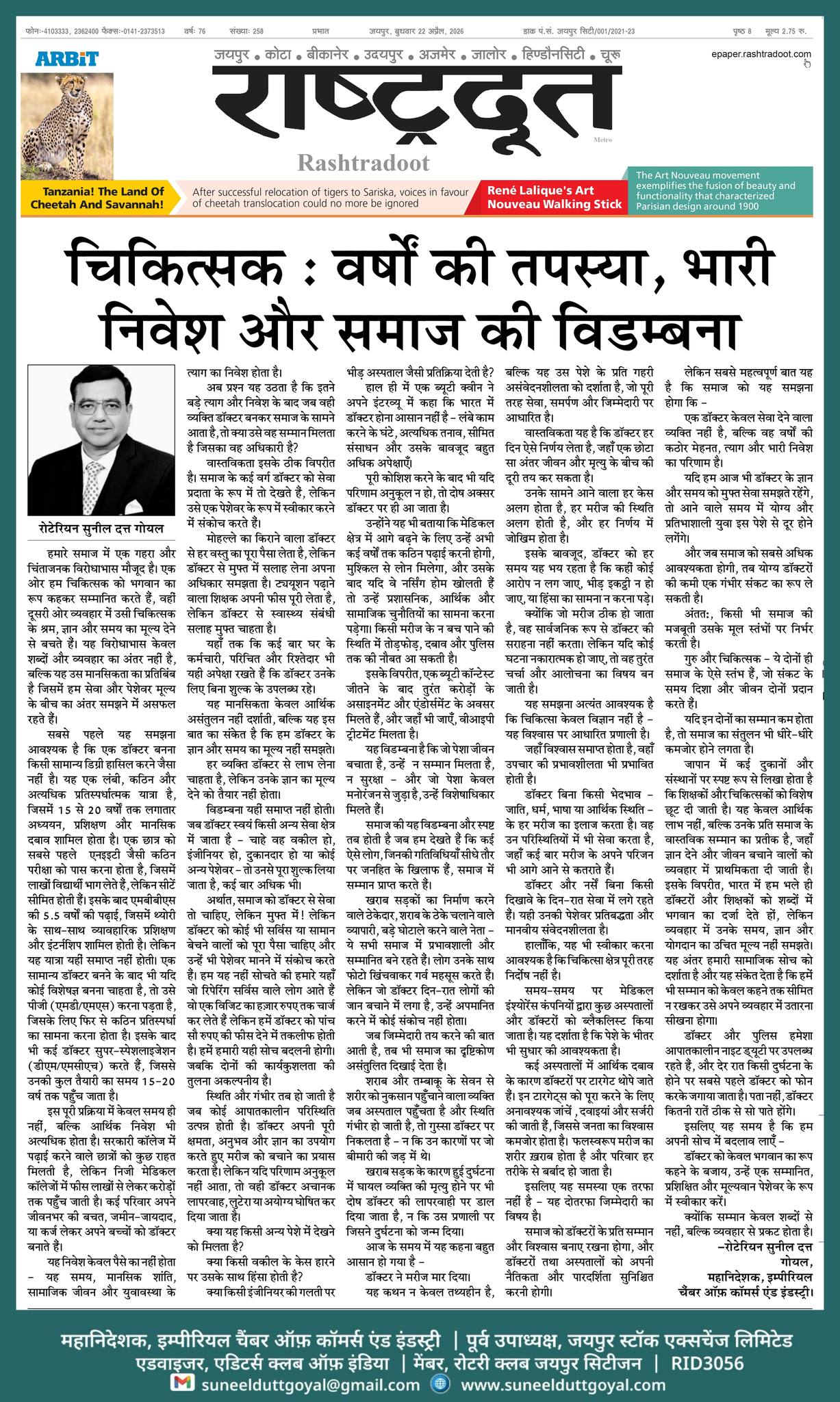
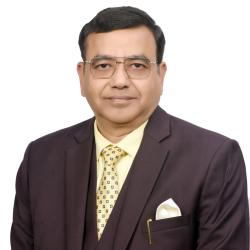
Rotarian Suneel Dutt Goyal
Director General, Imperial Chamber of Commerce and Industry,
Adviser, Editor’s Club of India,
Ex. Vice President, Jaipur Stock Exchange Limited, Jaipur, Rajasthan,
Member, Rotary Club Jaipur Citizen, (RID3056)
suneelduttgoyal@gmail.com
चिकित्सक: वर्षों की तपस्या, भारी निवेश और समाज की विडम्बना
हमारे समाज में एक गहरा और चिंताजनक विरोधाभास मौजूद है। एक ओर हम चिकित्सक को “भगवान का रूप” कहकर सम्मानित करते हैं, वहीं दूसरी ओर व्यवहार में उसी चिकित्सक के श्रम, ज्ञान और समय का मूल्य देने से बचते हैं। यह विरोधाभास केवल शब्दों और व्यवहार का अंतर नहीं है, बल्कि यह उस मानसिकता का प्रतिबिंब है जिसमें हम सेवा और पेशेवर मूल्य के बीच का अंतर समझने में असफल रहते हैं।
सबसे पहले यह समझना आवश्यक है कि एक डॉक्टर बनना किसी सामान्य डिग्री हासिल करने जैसा नहीं है। यह एक लंबी, कठिन और अत्यधिक प्रतिस्पर्धात्मक यात्रा है, जिसमें 15 से 20 वर्षों तक लगातार अध्ययन, प्रशिक्षण और मानसिक दबाव शामिल होता है। एक छात्र को सबसे पहले NEET जैसी कठिन परीक्षा को पास करना होता है, जिसमें लाखों विद्यार्थी भाग लेते हैं, लेकिन सीटें सीमित होती हैं। इसके बाद MBBS की 5.5 वर्षों की पढ़ाई, जिसमें थ्योरी के साथ-साथ व्यावहारिक प्रशिक्षण और इंटर्नशिप शामिल होती है।
लेकिन यह यात्रा यहीं समाप्त नहीं होती। एक सामान्य डॉक्टर बनने के बाद भी यदि कोई विशेषज्ञ बनना चाहता है, तो उसे PG (MD/MS) करना पड़ता है, जिसके लिए फिर से कठिन प्रतिस्पर्धा का सामना करना होता है। इसके बाद भी कई डॉक्टर सुपर-स्पेशलाइजेशन (DM/MCh) करते हैं, जिससे उनकी कुल तैयारी का समय 15–20 वर्ष तक पहुँच जाता है।
इस पूरी प्रक्रिया में केवल समय ही नहीं, बल्कि आर्थिक निवेश भी अत्यधिक होता है। सरकारी कॉलेज में पढ़ाई करने वाले छात्रों को कुछ राहत मिलती है, लेकिन निजी मेडिकल कॉलेजों में फीस लाखों से लेकर करोड़ों तक पहुँच जाती है। कई परिवार अपने जीवनभर की बचत, जमीन-जायदाद, या कर्ज लेकर अपने बच्चों को डॉक्टर बनाते हैं।
यह निवेश केवल पैसे का नहीं होता – यह समय, मानसिक शांति, सामाजिक जीवन और युवावस्था के त्याग का निवेश होता है।
अब प्रश्न यह उठता है कि इतने बड़े त्याग और निवेश के बाद जब वही व्यक्ति डॉक्टर बनकर समाज के सामने आता है, तो क्या उसे वह सम्मान मिलता है जिसका वह अधिकारी है?
वास्तविकता इसके ठीक विपरीत है। समाज के कई वर्ग डॉक्टर को “सेवा प्रदाता” के रूप में तो देखते हैं, लेकिन उसे एक “पेशेवर” के रूप में स्वीकार करने में संकोच करते हैं।
मोहल्ले का किराने वाला डॉक्टर से हर वस्तु का पूरा पैसा लेता है, लेकिन डॉक्टर से मुफ्त में सलाह लेना अपना अधिकार समझता है। ट्यूशन पढ़ाने वाला शिक्षक अपनी फीस पूरी लेता है, लेकिन डॉक्टर से स्वास्थ्य संबंधी सलाह मुफ्त चाहता है।
यहाँ तक कि कई बार घर के कर्मचारी, परिचित और रिश्तेदार भी यही अपेक्षा रखते हैं कि डॉक्टर उनके लिए बिना शुल्क के उपलब्ध रहे।
यह मानसिकता केवल आर्थिक असंतुलन नहीं दर्शाती, बल्कि यह इस बात का संकेत है कि हम डॉक्टर के ज्ञान और समय का मूल्य नहीं समझते।
हर व्यक्ति डॉक्टर से लाभ लेना चाहता है, लेकिन उनके ज्ञान का मूल्य देने को तैयार नहीं होता।
विडम्बना यहीं समाप्त नहीं होती। जब डॉक्टर स्वयं किसी अन्य सेवा क्षेत्र में जाता है – चाहे वह वकील हो, इंजीनियर हो, दुकानदार हो या कोई अन्य पेशेवर – तो उनसे पूरा शुल्क लिया जाता है, कई बार अधिक भी।
अर्थात, समाज को डॉक्टर से सेवा तो चाहिए, लेकिन मुफ्त में ! लेकिन डॉक्टर को कोई भी सर्विस या सामान बेचने वालों को पूरा पैसा चाहिए और उन्हें भी पेशेवर मानने में संकोच करते हैं। हम यह नहीं सोचते की हमारे यहाँ जो रिपेरिंग सर्विस वाले लोग आते हैं वो एक विजिट का हज़ार रुपए तक चार्ज कर लेते हैं लेकिन हमें डॉक्टर को पांच सौ रुपए की फीस देने में तकलीफ होती है। हमें हमारी यही सोच बदलनी होगी। जबकि दोनों की कार्यकुशलता की तुलना अकल्पनीय है।
स्थिति और गंभीर तब हो जाती है जब कोई आपातकालीन परिस्थिति उत्पन्न होती है। डॉक्टर अपनी पूरी क्षमता, अनुभव और ज्ञान का उपयोग करते हुए मरीज को बचाने का प्रयास करता है। लेकिन यदि परिणाम अनुकूल नहीं आता, तो वही डॉक्टर अचानक “लापरवाह”, “लुटेरा” या “अयोग्य” घोषित कर दिया जाता है।
क्या यह किसी अन्य पेशे में देखने को मिलता है?
क्या किसी वकील के केस हारने पर उसके साथ हिंसा होती है?
क्या किसी इंजीनियर की गलती पर भीड़ अस्पताल जैसी प्रतिक्रिया देती है?
हाल ही में एक ब्यूटी क्वीन ने अपने इंटरव्यू में कहा कि भारत में डॉक्टर होना आसान नहीं है – लंबे काम करने के घंटे, अत्यधिक तनाव, सीमित संसाधन और उसके बावजूद बहुत अधिक अपेक्षाएँ।
पूरी कोशिश करने के बाद भी यदि परिणाम अनुकूल न हो, तो दोष अक्सर डॉक्टर पर ही आ जाता है।
उन्होंने यह भी बताया कि मेडिकल क्षेत्र में आगे बढ़ने के लिए उन्हें अभी कई वर्षों तक कठिन पढ़ाई करनी होगी, मुश्किल से लोन मिलेगा, और उसके बाद यदि वे नर्सिंग होम खोलती हैं तो उन्हें प्रशासनिक, आर्थिक और सामाजिक चुनौतियों का सामना करना पड़ेगा। किसी मरीज के न बच पाने की स्थिति में तोड़फोड़, दबाव और पुलिस तक की नौबत आ सकती है।
इसके विपरीत, एक ब्यूटी कॉन्टेस्ट जीतने के बाद तुरंत करोड़ों के असाइनमेंट और एंडोर्समेंट के अवसर मिलते हैं, और जहाँ भी जाएँ, VIP ट्रीटमेंट मिलता है।
यह विडम्बना है कि जो पेशा जीवन बचाता है, उन्हें न सम्मान मिलता है, न सुरक्षा – और जो पेशा केवल मनोरंजन से जुड़ा है, उन्हें विशेषाधिकार मिलते हैं।
समाज की यह विडम्बना और स्पष्ट तब होती है जब हम देखते हैं कि कई ऐसे लोग, जिनकी गतिविधियाँ सीधे तौर पर जनहित के खिलाफ हैं, समाज में सम्मान प्राप्त करते हैं।
खराब सड़कों का निर्माण करने वाले ठेकेदार, शराब के ठेके चलाने वाले व्यापारी, बड़े घोटाले करने वाले नेता – ये सभी समाज में प्रभावशाली और सम्मानित बने रहते हैं। लोग उनके साथ फोटो खिंचवाकर गर्व महसूस करते हैं।
लेकिन जो डॉक्टर दिन-रात लोगों की जान बचाने में लगा है, उन्हें अपमानित करने में कोई संकोच नहीं होता।
जब जिम्मेदारी तय करने की बात आती है, तब भी समाज का दृष्टिकोण असंतुलित दिखाई देता है।
शराब और तम्बाकू के सेवन से शरीर को नुकसान पहुँचाने वाला व्यक्ति जब अस्पताल पहुँचता है और स्थिति गंभीर हो जाती है, तो गुस्सा डॉक्टर पर निकलता है – न कि उन कारणों पर जो बीमारी की जड़ में थे।
खराब सड़क के कारण हुई दुर्घटना में घायल व्यक्ति की मृत्यु होने पर भी दोष डॉक्टर की “लापरवाही” पर डाल दिया जाता है, न कि उस प्रणाली पर जिसने दुर्घटना को जन्म दिया।
आज के समय में यह कहना बहुत आसान हो गया है –
“डॉक्टर ने मरीज मार दिया।”
यह कथन न केवल तथ्यहीन है, बल्कि यह उस पेशे के प्रति गहरी असंवेदनशीलता को दर्शाता है, जो पूरी तरह सेवा, समर्पण और जिम्मेदारी पर आधारित है।
वास्तविकता यह है कि डॉक्टर हर दिन ऐसे निर्णय लेता है, जहाँ एक छोटा सा अंतर जीवन और मृत्यु के बीच की दूरी तय कर सकता है।
उनके सामने आने वाला हर केस अलग होता है, हर मरीज की स्थिति अलग होती है, और हर निर्णय में जोखिम होता है।
इसके बावजूद, डॉक्टर को हर समय यह भय रहता है कि कहीं कोई आरोप न लग जाए, भीड़ इकट्ठी न हो जाए, या हिंसा का सामना न करना पड़े।
क्योंकि जो मरीज ठीक हो जाता है, वह सार्वजनिक रूप से डॉक्टर की सराहना नहीं करता। लेकिन यदि कोई घटना नकारात्मक हो जाए, तो वह तुरंत चर्चा और आलोचना का विषय बन जाती है।
यह समझना अत्यंत आवश्यक है कि चिकित्सा केवल विज्ञान नहीं है – यह विश्वास पर आधारित प्रणाली है।
जहाँ विश्वास समाप्त होता है, वहाँ उपचार की प्रभावशीलता भी प्रभावित होती है।
डॉक्टर बिना किसी भेदभाव – जाति, धर्म, भाषा या आर्थिक स्थिति – के हर मरीज का इलाज करता है। वह उन परिस्थितियों में भी सेवा करता है, जहाँ कई बार मरीज के अपने परिजन भी आगे आने से कतराते हैं।
डॉक्टर और नर्सें बिना किसी दिखावे के दिन-रात सेवा में लगे रहते हैं। यही उनकी पेशेवर प्रतिबद्धता और मानवीय संवेदनशीलता है।
हालाँकि, यह भी स्वीकार करना आवश्यक है कि चिकित्सा क्षेत्र पूरी तरह निर्दोष नहीं है।
समय-समय पर मेडिकल इंश्योरेंस कंपनियों द्वारा कुछ अस्पतालों और डॉक्टरों को ब्लैकलिस्ट किया जाता है। यह दर्शाता है कि पेशे के भीतर भी सुधार की आवश्यकता है।
कई अस्पतालों में आर्थिक दबाव के कारण डॉक्टरों पर टारगेट थोपे जाते हैं। इन टारगेट्स को पूरा करने के लिए अनावश्यक जांचें , दवाइयां और सर्जरी की जाती हैं, जिससे जनता का विश्वास कमजोर होता है। फलस्वरूप मरीज का शरीर ख़राब होता है और परिवार हर तरीके से बर्बाद हो जाता है।
इसलिए यह समस्या एक तरफा नहीं है – यह दोतरफा जिम्मेदारी का विषय है।
समाज को डॉक्टरों के प्रति सम्मान और विश्वास बनाए रखना होगा, और डॉक्टरों तथा अस्पतालों को अपनी नैतिकता और पारदर्शिता सुनिश्चित करनी होगी।
लेकिन सबसे महत्वपूर्ण बात यह है कि समाज को यह समझना होगा कि –
एक डॉक्टर केवल सेवा देने वाला व्यक्ति नहीं है, बल्कि वह वर्षों की कठोर मेहनत, त्याग और भारी निवेश का परिणाम है।
यदि हम आज भी डॉक्टर के ज्ञान और समय को “मुफ्त सेवा” समझते रहेंगे, तो आने वाले समय में योग्य और प्रतिभाशाली युवा इस पेशे से दूर होने लगेंगे।
और जब समाज को सबसे अधिक आवश्यकता होगी, तब योग्य डॉक्टरों की कमी एक गंभीर संकट का रूप ले सकती है।
अंततः, किसी भी समाज की मजबूती उसके मूल स्तंभों पर निर्भर करती है।
गुरु और चिकित्सक – ये दोनों ही समाज के ऐसे स्तंभ हैं, जो संकट के समय दिशा और जीवन दोनों प्रदान करते हैं।
यदि इन दोनों का सम्मान कम होता है, तो समाज का संतुलन भी धीरे-धीरे कमजोर होने लगता है।
जापान में कई दुकानों और संस्थानों पर स्पष्ट रूप से लिखा होता है कि शिक्षकों और चिकित्सकों को विशेष छूट दी जाती है। यह केवल आर्थिक लाभ नहीं, बल्कि उनके प्रति समाज के वास्तविक सम्मान का प्रतीक है, जहाँ ज्ञान देने और जीवन बचाने वालों को व्यवहार में प्राथमिकता दी जाती है। इसके विपरीत, भारत में हम भले ही डॉक्टरों और शिक्षकों को शब्दों में “भगवान” का दर्जा देते हों, लेकिन व्यवहार में उनके समय, ज्ञान और योगदान का उचित मूल्य नहीं समझते। यह अंतर हमारी सामाजिक सोच को दर्शाता है और यह संकेत देता है कि हमें भी सम्मान को केवल कहने तक सीमित न रखकर उसे अपने व्यवहार में उतारना सीखना होगा।
डॉक्टर और पुलिस हमेशा आपातकालीन नाइट ड्यूटी पर उपलब्ध रहते हैं, और देर रात किसी दुर्घटना के होने पर सबसे पहले डॉक्टर को फोन करके जगाया जाता है। पता नहीं, डॉक्टर कितनी रातें ठीक से सो पाते होंगे।
इसलिए यह समय है कि हम अपनी सोच में बदलाव लाएँ –
डॉक्टर को केवल “भगवान का रूप” कहने के बजाय, उन्हें एक सम्मानित, प्रशिक्षित और मूल्यवान पेशेवर के रूप में स्वीकार करें।
क्योंकि सम्मान केवल शब्दों से नहीं, बल्कि व्यवहार से प्रकट होता है।
रोटेरियन सुनील दत्त गोयल
महानिदेशक, इम्पीरियल चैंबर ऑफ़ कॉमर्स एंड इंडस्ट्री,
एडवाइजर, एडिटर्स क्लब ऑफ़ इंडिया,
पूर्व उपाध्यक्ष, जयपुर स्टॉक एक्सचेंज लिमिटेड, जयपुर, राजस्थान
मेंबर, रोटरी क्लब जयपुर सिटीजन, (RID3056)
suneelduttgoyal@gmail.com