
In India, discussions around organ and blood donation are no longer limited to health awareness alone. They have now become a subject of conflict between social behavior and religious interpretations. When we analyze life-saving issues like organ, blood, and eye donation based on real data, an uncomfortable truth emerges – our society has more confusion than awareness, and more hesitation than service.
It is often alleged that in certain communities – particularly among a section of the Muslim society – there is reluctance or refusal towards organ and blood donation, and religious reasons are cited behind this hesitation.
However, when we move beyond emotions and examine this issue through facts and a global perspective, several important contradictions come to light.
Global Perspective: What Does the World Say?
According to the World Health Organization:
- More than 150,000 organ transplants are performed globally every year
- The actual need is nearly 10 times higher
- The demand for blood donation is continuously increasing in every country, especially for emergency services, cancer, thalassemia, kidney, and trauma cases
In many European and American countries, organ donation is considered not a religious issue, but a civic duty. Countries like Spain follow an “opt-out model,” where organ donation is presumed after death unless a person has explicitly refused.
India’s Reality: High Need, Low Donation
Official data from the National Organ and Tissue Transplant Organization (NOTTO) reveals:
- Around 500,000 people die every year in India due to a lack of organs
- India’s organ donation rate is only 0.5 per million population
- In developed countries, this rate ranges from 20 to 40 per million
In terms of blood donation:
- India requires approximately 14 million units of blood annually
- Voluntary blood donation is still far below the required level
It cannot be ignored that the backbone of voluntary blood donation camps in India has largely been social and religious organizations, where Hindu, Sikh, Jain, Buddhist, Christian, and other institutions are actively involved – while participation from sections of the Muslim community remains comparatively limited.
Global Islamic Perspective: Where Saving Life is Priority
In many major Muslim-majority countries – such as Saudi Arabia, Qatar, the United Arab Emirates (Dubai), Turkey, and Iran:
- Organ donation is fully legal and institutionally accepted
- Blood banks are government-regulated and well-organized
- Islamic scholars have repeatedly clarified that:
“Saving a human life is the highest duty (Fard)”
In countries like Iran, the organ transplant system is so advanced that it is considered a model in the region.
This clearly implies that:
- Islam, in its core teachings, does not prohibit organ or blood donation
- Rather, it allows and supports it based on circumstances
This raises a natural question:
If other Islamic countries can stand with science and humanity, why are some groups in India pushing society toward fear and doubt?
Why Different Behavior in India?
This is the most critical question:
If the same religion:
- Permits organ donation in Saudi Arabia
- Runs blood donation camps in Dubai
- Supports transplant systems in Iran
Then how can some people in India label it as “religiously wrong”?
The issue here is not religion itself, but:
- Misconceptions at the local level
- Incomplete knowledge
- Lack of responsible social leadership
The ‘Kafir’ Argument and Its Practical Contradiction
Another argument often heard is that Islam advises limiting relations with “Kafirs” (non-Muslims), and based on this, some people avoid blood or organ donation.
But this raises a fundamental question:
If taking from a “Kafir” is wrong, then why is this distinction not applied:
- During hospital treatment
- During blood transfusion
- During organ transplant
If the blood of those whom you consider “Kafir” is flowing in your veins, how would that be acceptable to God?
The reality is:
- In emergencies, a patient values life, not religion
- A doctor sees the needs of the human body, not faith
Therefore, saying:
“Taking is acceptable, but giving is wrong”
is neither logically valid from a religious standpoint nor ethically correct.
Faith vs Extremism: Where is the Problem?
This article is not against any religion, but against religious extremism, which transforms faith into fear and confusion.
In India, it has been observed that:
- Some extremist ideologies discourage blood and organ donation by labeling them as “religiously doubtful”
- While in many Islamic countries, the same practices are supported both religiously and institutionally
This contradiction forces us to think – if the religion is the same, why is the behavior so different?
Consequences of Religious Extremism
The biggest harm caused by religious extremism is:
- It prevents individuals from thinking rationally
- It divides society into fragments
- It portrays science as a conspiracy
When extremism teaches that:
- “Blood from a certain religion is not acceptable”
- “Organ donation harms the soul”
It goes against not only the Constitution, but also against humanity itself.
Science Gives a Clear Answer
According to medical science:
- Blood has no religion
- Organs carry no religious identity
- Transplants do not affect the soul or identity
In hospitals:
- Doctors do not ask religion while saving a life
- Blood banks do not check caste
Then why does this discrimination exist in society?
Role of Law: Why Strict Measures are Needed Now
In India today:
- Blood donation is completely voluntary
- Awareness and processes for organ donation remain weak
Now the time has come for:
- Mandatory education on organ donation at school and college levels
- Digital organ donor registration systems in hospitals
- Serious debate on implementing an opt-out model after death
- Legal action against those who deliberately spread misinformation
This is not anti-religion – it is a policy for saving lives.
Life is the Greatest Religion
India is a country where:
- The core values of all religions emphasize service and compassion
But extremism blurs these values.
Today, the need is:
- To connect faith with rational thinking
- To not place religion above humanity
- To understand that saving a life is not the duty of one religion, but of society as a whole
Because ultimately:
The blood that sustains someone’s life is simply human blood.
Final Question: Society Must Answer Itself
The time has come for society to ask itself some tough questions:
- Will we let our own people die because of misconceptions?
- Will we be willing to receive donations, but refuse to give? If receiving is justified, how can giving be a sin – or is this just narrow selfish thinking?
- Will we weaken humanity in the name of religion?
If the answer to these questions is “No,” then the responsibility for change lies with us.
Rotarian Suneel Dutt Goyal
Director General, Imperial Chamber of Commerce and Industry,
Adviser, Editor’s Club of India,
Ex. Vice President, Jaipur Stock Exchange Limited, Jaipur, Rajasthan,
Member, Rotary Club Jaipur Citizen, (RID3056)
suneelduttgoyal@gmail.com
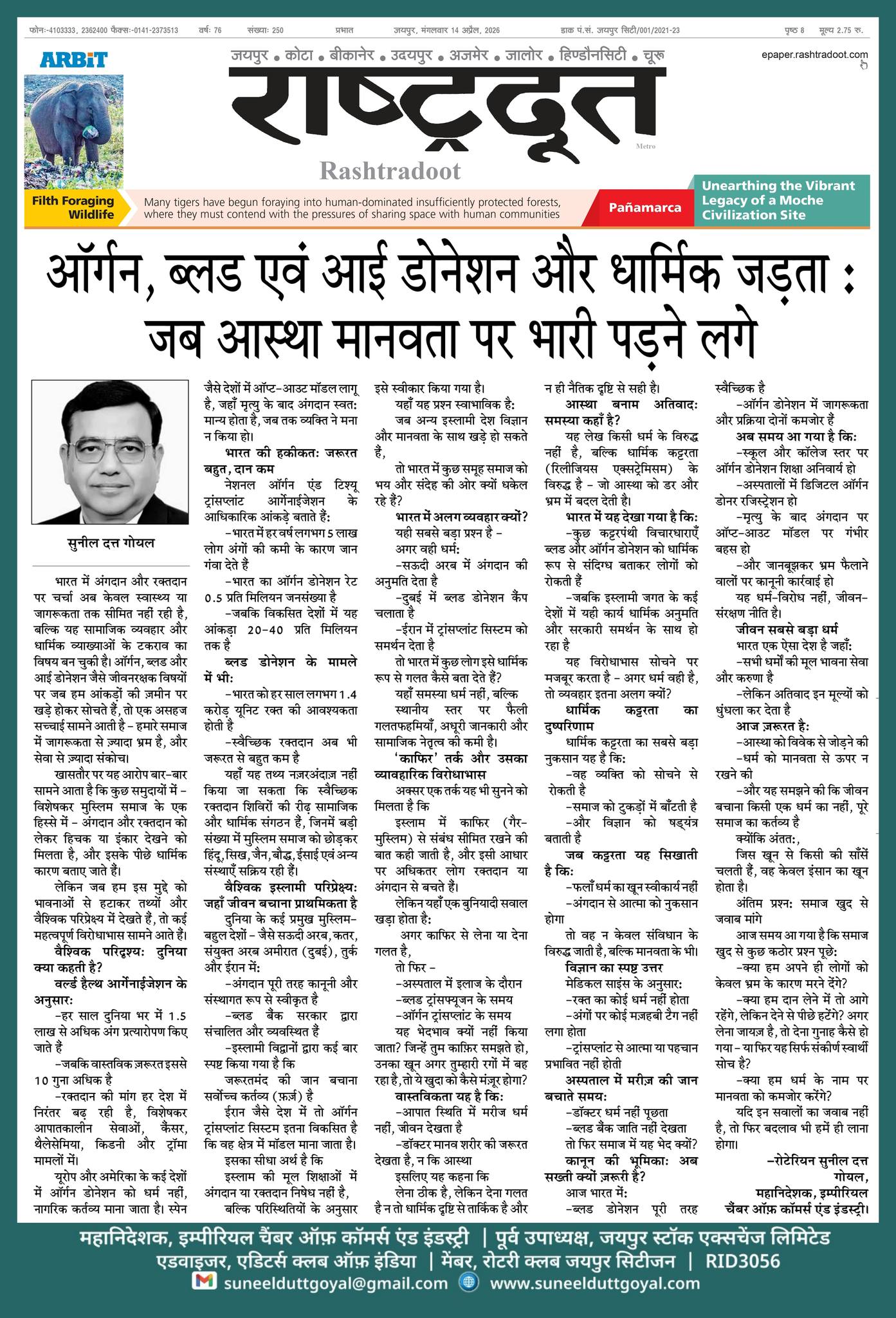
ऑर्गन, ब्लड एवं आई डोनेशन और धार्मिक जड़ता : जब आस्था मानवता पर भारी पड़ने लगे
भारत में अंगदान और रक्तदान पर चर्चा अब केवल स्वास्थ्य या जागरूकता तक सीमित नहीं रही है, बल्कि यह सामाजिक व्यवहार और धार्मिक व्याख्याओं के टकराव का विषय बन चुकी है। ऑर्गन, ब्लड और आई डोनेशन जैसे जीवनरक्षक विषयों पर जब हम आंकड़ों की ज़मीन पर खड़े होकर सोचते हैं, तो एक असहज सच्चाई सामने आती है – हमारे समाज में जागरूकता से ज़्यादा भ्रम है, और सेवा से ज़्यादा संकोच।
खासतौर पर यह आरोप बार-बार सामने आता है कि कुछ समुदायों में – विशेषकर मुस्लिम समाज के एक हिस्से में – अंगदान और रक्तदान को लेकर हिचक या इंकार देखने को मिलता है, और इसके पीछे धार्मिक कारण बताए जाते हैं।
लेकिन जब हम इस मुद्दे को भावनाओं से हटाकर तथ्यों और वैश्विक परिप्रेक्ष्य में देखते हैं, तो कई महत्वपूर्ण विरोधाभास सामने आते हैं।
वैश्विक परिदृश्य: दुनिया क्या कहती है?
वर्ल्ड हैल्थ आर्गेनाईजेशन के अनुसार:
- हर साल दुनिया भर में 1.5 लाख से अधिक अंग प्रत्यारोपण किए जाते हैं
- जबकि वास्तविक ज़रूरत इससे 10 गुना अधिक है
- रक्तदान की मांग हर देश में निरंतर बढ़ रही है, विशेषकर आपातकालीन सेवाओं, कैंसर, थैलेसेमिया, किडनी और ट्रॉमा मामलों में।
यूरोप और अमेरिका के कई देशों में ऑर्गन डोनेशन को धर्म नहीं, नागरिक कर्तव्य माना जाता है। स्पेन जैसे देशों में “ऑप्ट-आउट मॉडल” लागू है, जहाँ मृत्यु के बाद अंगदान स्वतः मान्य होता है, जब तक व्यक्ति ने मना न किया हो।
भारत की हकीकत: जरूरत बहुत, दान कम
नेशनल ऑर्गन एंड टिश्यू ट्रांसप्लांट आर्गेनाईजेशन (NOTTO) के आधिकारिक आंकड़े बताते हैं:
- भारत में हर वर्ष लगभग 5 लाख लोग अंगों की कमी के कारण जान गंवा देते हैं
- भारत का ऑर्गन डोनेशन रेट 0.5 प्रति मिलियन जनसंख्या है
- जबकि विकसित देशों में यह आंकड़ा 20–40 प्रति मिलियन तक है
ब्लड डोनेशन के मामले में भी:
- भारत को हर साल लगभग 1.4 करोड़ यूनिट रक्त की आवश्यकता होती है
- स्वैच्छिक रक्तदान अब भी जरूरत से बहुत कम है
यहाँ यह तथ्य नज़रअंदाज़ नहीं किया जा सकता कि स्वैच्छिक रक्तदान शिविरों की रीढ़ सामाजिक और धार्मिक संगठन हैं, जिनमें बड़ी संख्या में मुस्लिम समाज को छोड़कर हिंदू, सिख, जैन, बौद्ध , ईसाई एवं अन्य संस्थाएँ सक्रिय रही हैं।
वैश्विक इस्लामी परिप्रेक्ष्य: जहाँ जीवन बचाना प्राथमिकता है
दुनिया के कई प्रमुख मुस्लिम-बहुल देशों – जैसे सऊदी अरब, कतर, संयुक्त अरब अमीरात (दुबई), तुर्की और ईरान में:
- अंगदान पूरी तरह कानूनी और संस्थागत रूप से स्वीकृत है
- ब्लड बैंक सरकार द्वारा संचालित और व्यवस्थित हैं
- इस्लामी विद्वानों द्वारा कई बार स्पष्ट किया गया है कि
“जरूरतमंद की जान बचाना सर्वोच्च कर्तव्य (फ़र्ज़) है”
ईरान जैसे देश में तो ऑर्गन ट्रांसप्लांट सिस्टम इतना विकसित है कि वह क्षेत्र में मॉडल माना जाता है।
इसका सीधा अर्थ है कि
इस्लाम की मूल शिक्षाओं में अंगदान या रक्तदान निषेध नहीं है,
बल्कि परिस्थितियों के अनुसार इसे स्वीकार किया गया है।
यहाँ यह प्रश्न स्वाभाविक है:
जब अन्य इस्लामी देश विज्ञान और मानवता के साथ खड़े हो सकते हैं,
तो भारत में कुछ समूह समाज को भय और संदेह की ओर क्यों धकेल रहे हैं?
भारत में अलग व्यवहार क्यों?
यही सबसे बड़ा प्रश्न है –
अगर वही धर्म:
- सऊदी अरब में अंगदान की अनुमति देता है
- दुबई में ब्लड डोनेशन कैंप चलाता है
- ईरान में ट्रांसप्लांट सिस्टम को समर्थन देता है
तो भारत में कुछ लोग इसे “धार्मिक रूप से गलत” कैसे बता देते हैं?
यहाँ समस्या धर्म नहीं, बल्कि
स्थानीय स्तर पर फैली गलतफहमियाँ, अधूरी जानकारी और सामाजिक नेतृत्व की कमी है।
‘काफिर’ तर्क और उसका व्यावहारिक विरोधाभास
अक्सर एक तर्क यह भी सुनने को मिलता है कि
इस्लाम में “काफिर” (गैर-मुस्लिम) से संबंध सीमित रखने की बात कही जाती है, और इसी आधार पर अधिकतर लोग रक्तदान या अंगदान से बचते हैं।
लेकिन यहाँ एक बुनियादी सवाल खड़ा होता है:
अगर “काफिर” से लेना या देना गलत है,
तो फिर –
- अस्पताल में इलाज के दौरान
- ब्लड ट्रांसफ्यूजन के समय
- ऑर्गन ट्रांसप्लांट के समय
यह भेदभाव क्यों नहीं किया जाता? जिन्हें तुम काफ़िर समझते हो, उनका खून अगर तुम्हारी रगों में बह रहा है, तो ये खुदा को कैसे मंज़ूर होगा?
वास्तविकता यह है कि:
- आपात स्थिति में मरीज धर्म नहीं, जीवन देखता है
- डॉक्टर मानव शरीर की जरूरत देखता है, न कि आस्था
इसलिए यह कहना कि
“लेना ठीक है, लेकिन देना गलत है” न तो धार्मिक दृष्टि से तार्किक है और न ही नैतिक दृष्टि से सही है।
आस्था बनाम अतिवाद: समस्या कहाँ है?
यह लेख किसी धर्म के विरुद्ध नहीं है, बल्कि धार्मिक कट्टरता (रिलीजियस एक्सट्रेमिसम) के विरुद्ध है – जो आस्था को डर और भ्रम में बदल देती है।
भारत में यह देखा गया है कि:
- कुछ कट्टरपंथी विचारधाराएँ ब्लड और ऑर्गन डोनेशन को “धार्मिक रूप से संदिग्ध” बताकर लोगों को रोकती हैं
- जबकि इस्लामी जगत के कई देशों में यही कार्य धार्मिक अनुमति और सरकारी समर्थन के साथ हो रहा है
यह विरोधाभास सोचने पर मजबूर करता है – अगर धर्म वही है, तो व्यवहार इतना अलग क्यों?
धार्मिक कट्टरता का दुष्परिणाम
धार्मिक कट्टरता का सबसे बड़ा नुकसान यह है कि:
- वह व्यक्ति को सोचने से रोकती है
- समाज को टुकड़ों में बाँटती है
- और विज्ञान को षड्यंत्र बताती है
जब कट्टरता यह सिखाती है कि:
- “फलाँ धर्म का खून स्वीकार्य नहीं”
- “अंगदान से आत्मा को नुकसान होगा”
तो वह न केवल संविधान के विरुद्ध जाती है, बल्कि मानवता के भी।
विज्ञान का स्पष्ट उत्तर
मेडिकल साइंस के अनुसार:
- रक्त का कोई धर्म नहीं होता
- अंगों पर कोई मज़हबी टैग नहीं लगा होता
- ट्रांसप्लांट से आत्मा या पहचान प्रभावित नहीं होती
अस्पताल में मरीज़ की जान बचाते समय:
- डॉक्टर धर्म नहीं पूछता
- ब्लड बैंक जाति नहीं देखता
तो फिर समाज में यह भेद क्यों?
कानून की भूमिका: अब सख्ती क्यों ज़रूरी है?
आज भारत में:
- ब्लड डोनेशन पूरी तरह स्वैच्छिक है
- ऑर्गन डोनेशन में जागरूकता और प्रक्रिया दोनों कमजोर हैं
अब समय आ गया है कि:
- स्कूल और कॉलेज स्तर पर ऑर्गन डोनेशन शिक्षा अनिवार्य हो
- अस्पतालों में डिजिटल ऑर्गन डोनर रजिस्ट्रेशन हो
- मृत्यु के बाद अंगदान पर ऑप्ट-आउट मॉडल पर गंभीर बहस हो
- और जानबूझकर भ्रम फैलाने वालों पर कानूनी कार्रवाई हो
यह धर्म-विरोध नहीं, जीवन-संरक्षण नीति है।
जीवन सबसे बड़ा धर्म
भारत एक ऐसा देश है जहाँ:
- सभी धर्मों की मूल भावना सेवा और करुणा है
- लेकिन अतिवाद इन मूल्यों को धुंधला कर देता है
आज ज़रूरत है:
- आस्था को विवेक से जोड़ने की
- धर्म को मानवता से ऊपर न रखने की
- और यह समझने की कि जीवन बचाना किसी एक धर्म का नहीं, पूरे समाज का कर्तव्य है
क्योंकि अंततः,
जिस खून से किसी की साँसें चलती हैं, वह केवल इंसान का खून होता है।
अंतिम प्रश्न: समाज खुद से जवाब मांगे
आज समय आ गया है कि समाज खुद से कुछ कठोर प्रश्न पूछे:
- क्या हम अपने ही लोगों को केवल भ्रम के कारण मरने देंगे?
- क्या हम दान लेने में तो आगे रहेंगे, लेकिन देने से पीछे हटेंगे? अगर लेना जायज़ है, तो देना गुनाह कैसे हो गया – या फिर यह सिर्फ संकीर्ण स्वार्थी सोच है?
- क्या हम धर्म के नाम पर मानवता को कमजोर करेंगे?
यदि इन सवालों का जवाब “नहीं” है, तो फिर बदलाव भी हमें ही लाना होगा।
रोटेरियन सुनील दत्त गोयल
महानिदेशक, इम्पीरियल चैंबर ऑफ़ कॉमर्स एंड इंडस्ट्री,
एडवाइजर, एडिटर्स क्लब ऑफ़ इंडिया,
पूर्व उपाध्यक्ष, जयपुर स्टॉक एक्सचेंज लिमिटेड, जयपुर, राजस्थान
मेंबर, रोटरी क्लब जयपुर सिटीजन, (RID3056)
suneelduttgoyal@gmail.com